
Bavarian State Opera tickets 17 February 2027 - 4. Academy Concert: Edward Gardner | GoComGo.com

4. Academy Concert: Edward Gardner

Bavarian State Opera, National Theatre, Munich, Germany
All photos (3)
Select date and time
7 PM
From
US$ 93

E-tickets: Print at home or at the box office of the event if so specified. You will find more information in your booking confirmation email.

You can only select the category, and not the exact seats.
If you order 2 or 3 tickets: your seats will be next to each other.
If you order 4 or more tickets: your seats will be next to each other, or, if this is not possible, we will provide a combination of groups of seats (at least in pairs, for example 2+2 or 2+3).

Important Info
Type: Classical Concert
City: Munich, Germany
Starts at: 19:00

E-tickets: Print at home or at the box office of the event if so specified. You will find more information in your booking confirmation email.

You can only select the category, and not the exact seats.
If you order 2 or 3 tickets: your seats will be next to each other.
If you order 4 or more tickets: your seats will be next to each other, or, if this is not possible, we will provide a combination of groups of seats (at least in pairs, for example 2+2 or 2+3).

Programme
Paul Dukas: Fanfare aus "La Peri"
Eugène Ysaÿe: Poem no.6 for two violin and orchestra "Amitié", Op.26
Igor Stravinsky: The Firebird
Overview

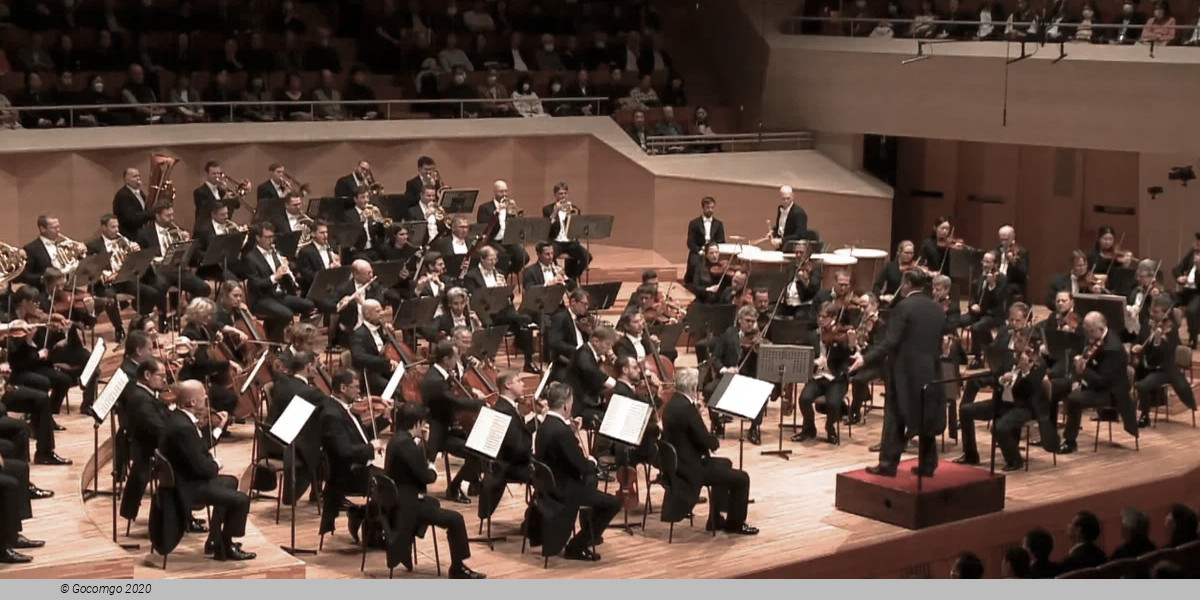
The 4th Academy Concert conducted by Edward Gardner at the prestigious Bavarian State Opera presents a dynamic evening of orchestral music performed by emerging young musicians. The concert highlights artistic growth, collaboration, and the excellence of the next generation of performers.


The 4th Academy Concert: Edward Gardner is part of the Bavarian State Opera’s prestigious academy program, dedicated to nurturing and supporting young professional musicians at the beginning of their careers. This concert offers a unique opportunity to experience emerging talent performing at a high artistic level under the guidance of an internationally respected conductor.

Edward Gardner, known for his clarity of interpretation, energetic conducting style, and глубокое понимание orchestral repertoire, leads the academy ensemble through a thoughtfully curated program. The repertoire may include symphonic works, orchestral excerpts, and selections from opera, allowing young musicians to explore a wide range of musical styles and expressive possibilities.

The Academy Concert series provides insight into the artistic development of future professionals. These performances are characterized by freshness, passion, and a spirit of discovery, as young performers bring new perspectives to well-known works.

Presented at the Bavarian State Opera in Munich, the concert benefits from the venue’s exceptional acoustics and rich cultural heritage. The event reflects the institution’s commitment to education, artistic excellence, and the future of classical music.

The 4th Academy Concert is both a concert and an inspiring artistic experience, celebrating mentorship, collaboration, and the growth of young musicians on a world-class stage.

Venue Info

Bavarian State Opera - Munich
Location   Max-Joseph-Platz 2

The Bavarian State Opera or the National Theatre (Nationaltheater) on Max-Joseph-Platz in Munich, Germany, is a historic opera house and the main theatre of Munich, home of the Bavarian State Opera, Bavarian State Orchestra, and the Bavarian State Ballet.

During its early years, the National Theatre saw the premières of a significant number of operas, including many by German composers. These included Wagner’s Tristan und Isolde (1865), Die Meistersinger von Nürnberg (1868), Das Rheingold (1869) and Die Walküre (1870), after which Wagner chose to build the Festspielhaus in Bayreuth and held further premières of his works there.

During the latter part of the 19th century, it was Richard Strauss who would make his mark on the theatre in the city in which he was born in 1864. After accepting the position of conductor for a short time, Strauss returned to the theatre to become principal conductor from 1894 to 1898. In the pre-War period, his Friedenstag (1938) and Capriccio were premièred in Munich. In the post-War period, the house has seen significant productions and many world premieres.

First theatre – 1818 to 1823
The first theatre was commissioned in 1810 by King Maximilian I of Bavaria because the nearby Cuvilliés Theatre had too little space. It was designed by Karl von Fischer, with the 1782 Odéon in Paris as architectural precedent. Construction began on 26 October 1811 but was interrupted in 1813 by financing problems. In 1817 a fire occurred in the unfinished building.

The new theatre finally opened on 12 October 1818 with a performance of Die Weihe by Ferdinand Fränzl, but was soon destroyed by another fire on 14 January 1823; the stage décor caught fire during a performance of Die beyden Füchse by Étienne Méhul and the fire could not be put out because the water supply was frozen. Coincidentally the Paris Odéon itself burnt down in 1818.

Second theatre – 1825 to 1943
Designed by Leo von Klenze, the second theatre incorporated Neo-Grec features in its portico and triangular pediment and an entrance supported by Corinthian columns. In 1925 it was modified to create an enlarged stage area with updated equipment. The building was gutted in an air raid on the night of 3 October 1943.

Third theatre – 1963 to present
The third and present theatre (1963) recreates Karl von Fischer's original neo-classical design, though on a slightly larger, 2,100-seat scale. The magnificent royal box is the center of the interior rondel, decorated with two large caryatids. The new stage covers 2,500 square meters (3,000 sq yd), and is thus the world's third largest, after the Opéra Bastille in Paris and the Grand Theatre, Warsaw.

Through the consistent use of wood as a building material, the auditorium has excellent acoustics. Architect Gerhard Moritz Graubner closely preserved the original look of the foyer and main staircase. It opened on 21 November 1963 with an invitation-only performance of Die Frau ohne Schatten under the baton of Joseph Keilberth. Two nights later came the first public performance, of Die Meistersinger von Nürnberg, again under Keilberth.

Important Info
Type: Classical Concert
City: Munich, Germany
Starts at: 19:00
Top of page