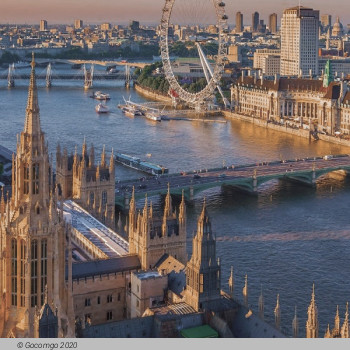
Place: Palace of Westminster, London and Fotheringhay Castle, Northamptonshire, England.
Time: The year 1587.
Act 1
Scene 1: Elisabetta's court at Westminster
The Lords and Ladies of the Court enter after a tournament to honor the French ambassador, who has brought a marriage proposal to Queen Elizabeth from the Dauphin François. They express their joy as Elizabeth enters. She considers the proposal, one which would create an alliance with France, but she is reluctant to give up her freedom and also pardon her cousin Mary Stuart, the former Queen of Scots, whom she has imprisoned because of various plots against her throne (Cavatina: Ahi! quando all'ara scórgemi / "Ah! when at the altar a chaste love from heaven singles me out"). Elizabeth expresses her uncertainty while at the same time, Talbot and the courtiers plead for Mary's life (Cabaletta: Ah! dal Ciel discenda un raggio / "Ah! may some ray descend from heaven").
Just as Elizabeth inquires where Leicester is, he enters and Elizabeth tells him to inform the French ambassador that she will indeed marry François. He betrays no signs of being jealous, and the Queen assumes that she has a rival.
Alone with Leicester, Talbot reveals to him that he has just returned from Fotheringay and gives a letter and a miniature portrait of Mary. Joyously, Leicester recalls his love for Mary (Aria of Leicester, then duet with Talbot: Ah! rimiro il bel sembiante / "Ah! Again I see her beautiful face"). Talbot asks what he intends to do and Leicester swears to try to free her from her imprisonment (Vuò liberarla! Vuò liberarla! / "I want to set her free").
Talbot leaves and, as Leicester is about to do so, Elizabeth enters. Clearly knowing what has gone on between the two men, she questions him, asks about a letter from Mary, and then demands to see it. Reluctantly, Leicester hands it over, noting that Mary has asked for a meeting with her cousin and he pleads with the Queen to agree to do so. Also, upon her questioning, he confesses his love for Mary (Duet of Leicester and Elizabeth: Era d'amor l'immagine / "She was the picture of love"). Told that Elizabeth can join a hunting party on the estates where Mary is imprisoned, she agrees to the meeting, albeit with revenge on her mind (Cabaletta to the duet: Sul crin la rivale la man mi stendea / "Over my head my rival stretched out her hand").
Scene 2: Fotheringay Castle
[In many modern performances this scene is called Act 2, with the final act becoming Act 3. Donizetti scholar William Ashbrook in Grove Dictionary notes that the opera is "in two or three acts".]
Mary reflects on her youth in France with her companion, Anna (Cavatina: Oh nube! che lieve per l'aria ti aggiri / "Oh cloud! that wanders light upon the breeze"). The sounds of a royal hunt are heard and, hearing the hunters cry out that the Queen is close by, Mary expresses her disgust (Cabaletta: Nella pace del mesto reposo / "In the peace of my sad seclusion, she would afflict me with a new terror"). To her surprise, Leicester approaches and warns Mary of Elizabeth's imminent arrival, counseling her to behave humbly towards the Queen, who is then despondent (Duet: Da tutti abbandonata / "Forsaken by everyone… my heart knows no hope"). But assuring Mary that he will do whatever is necessary to obtain her freedom, Leicester leaves her to meet Elizabeth. He then attempts to plead with the Queen for her forbearance.
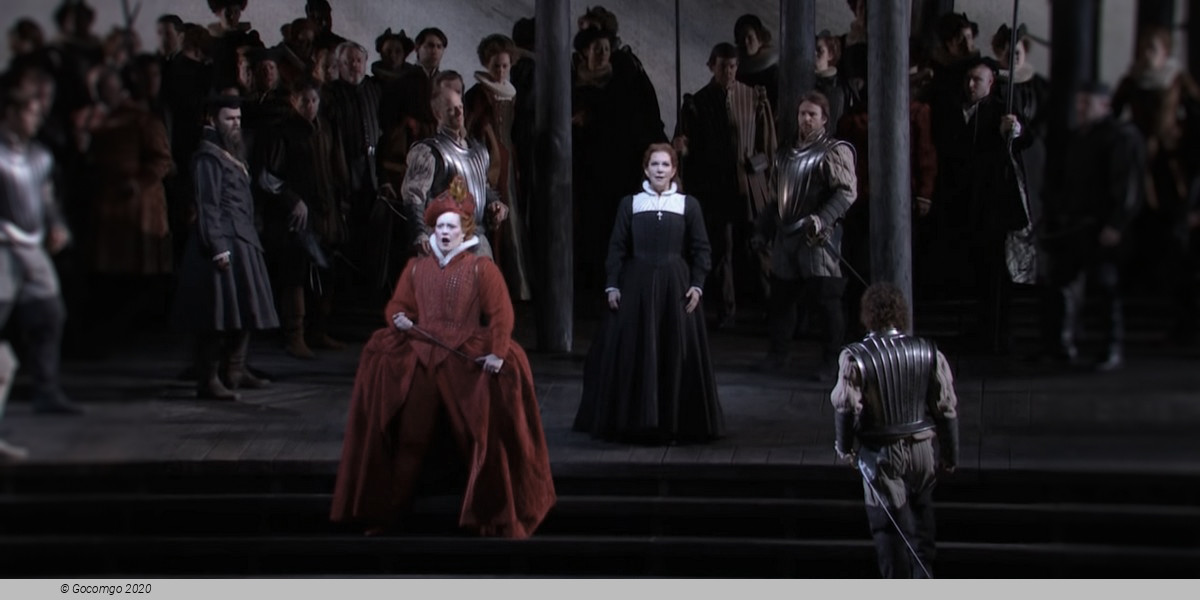
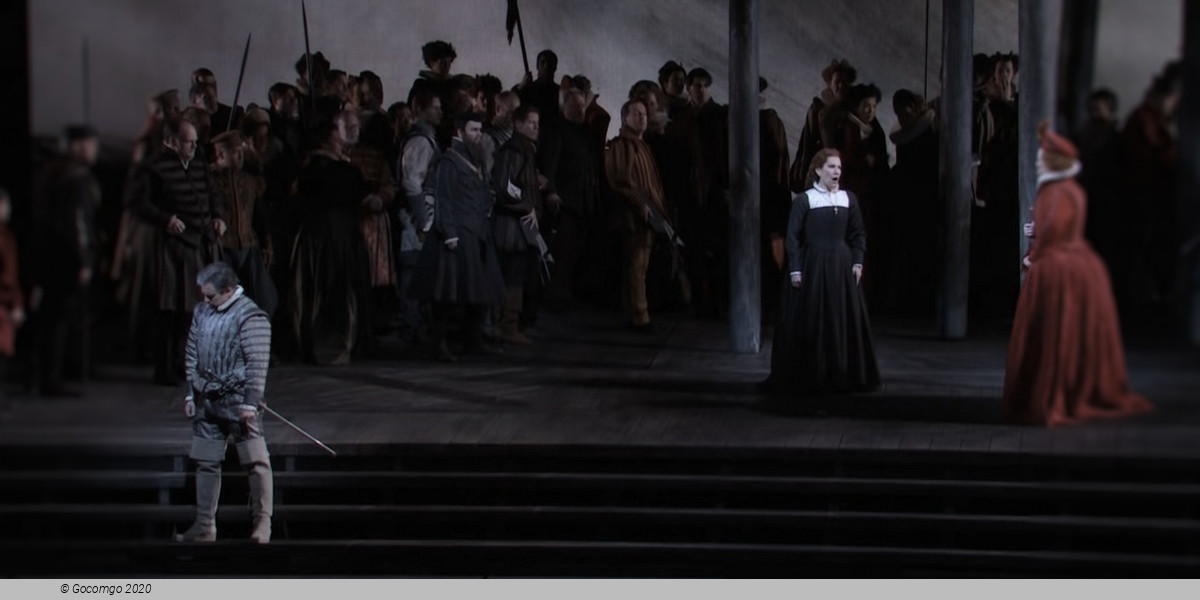
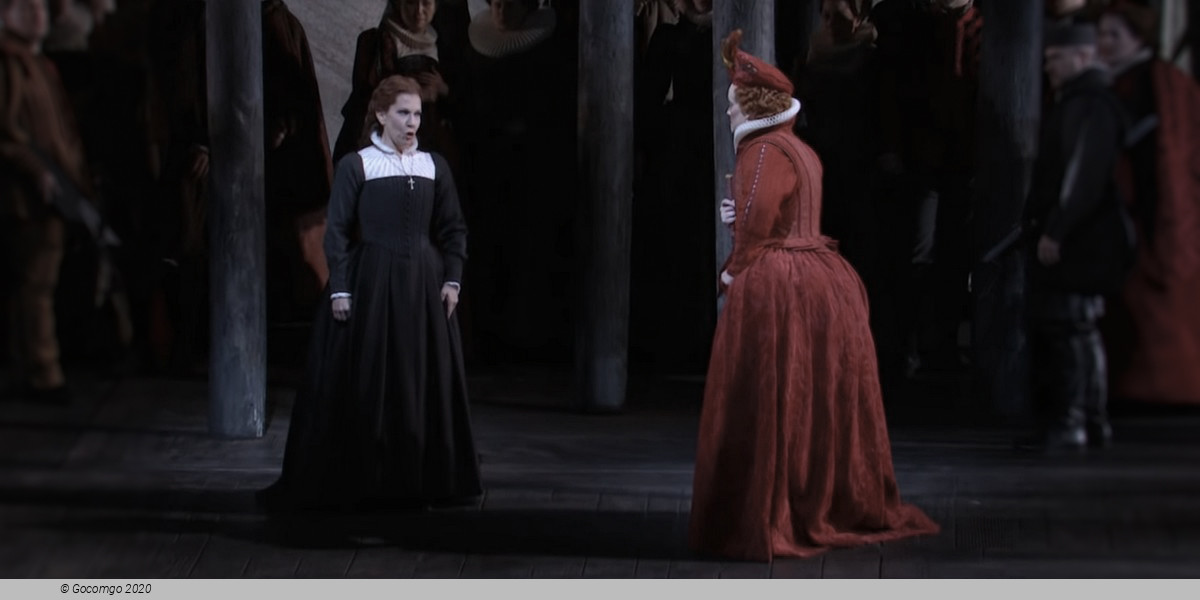
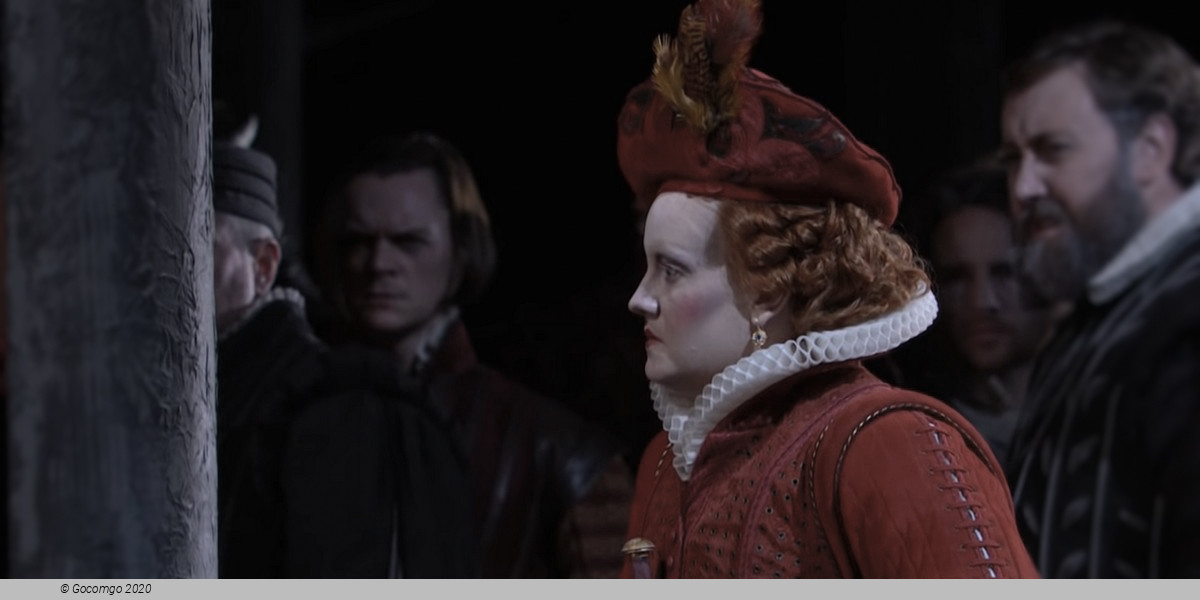
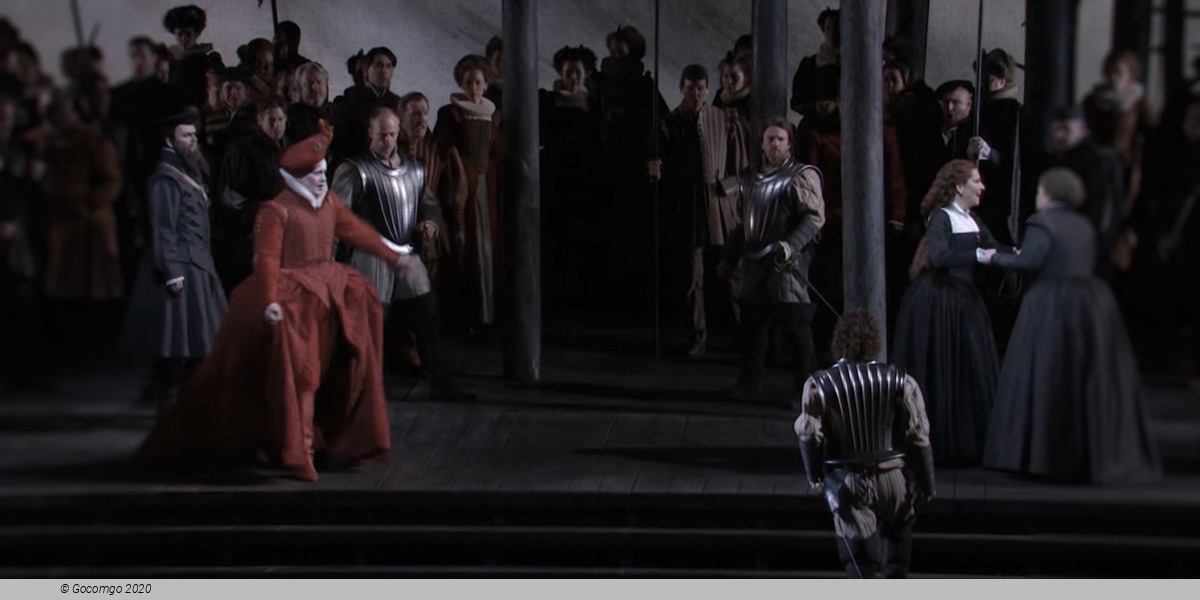
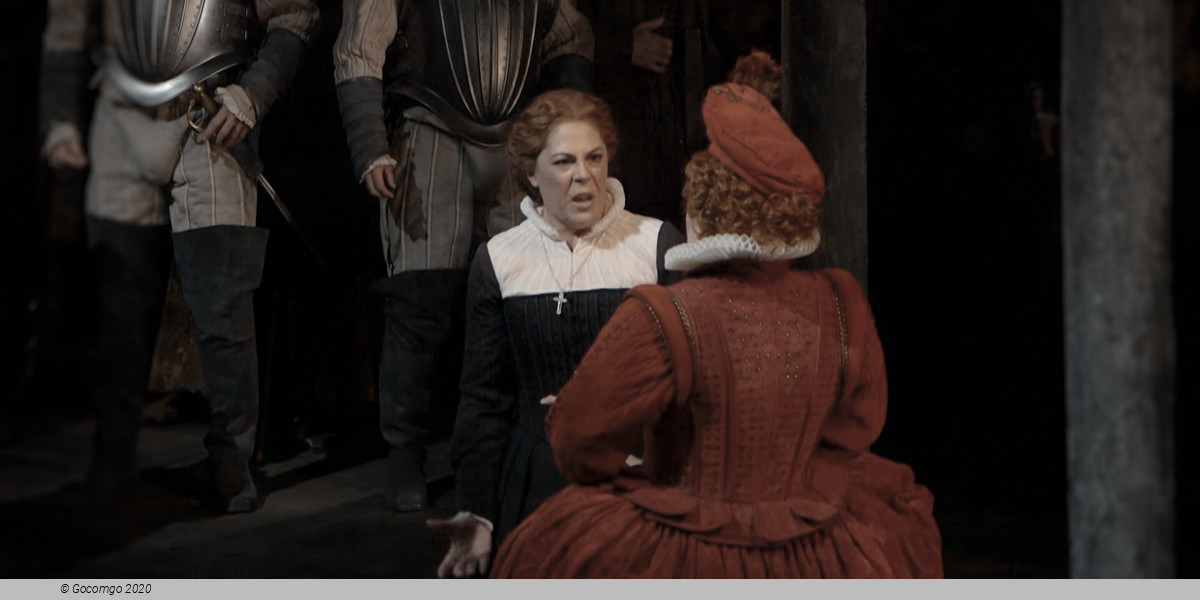
When Mary is brought in by Talbot, Elizabeth reacts with hostility (È sempre la stessa: superba, orgogliosa / She is always the same, proud, overbearing") and, after each character collectively expresses his or her feelings, Mary approaches and kneels before the Queen (Aria: Morta al mondo, ab! morta al trono / "Dead to the world, and dead to the throne… I come to beg your pardon"). The confrontation soon becomes hostile. Elizabeth accuses Mary of having murdered her husband, Lord Darnley, as well as acts of treason and debauchery, all the while Leicester attempting to calm both sides. Stung by Elizabeth's false accusations, Mary calls her the Figlia impura di Bolena ("Impure daughter of Boleyn") and continues with the final insult: Profanato è il soglio inglese, vil bastarda, dal tuo piè! ("The English throne is sullied, vile bastard, by your foot"). Elizabeth is horrified and demands that the guards take Mary away, declaring "The axe that awaits you will show my revenge". Mary is returned to captivity.
Act 2
Scene 1: A room in Elisabetta's apartments
Cecil enters with the death warrant and attempts to persuade her to sign it. While she hesitates, Elizabeth contemplates the situation (Aria: Quella vita a me funesta / "That life, so threatening to me"). Cecil urges her to sign it "so that every ruler will know how to pardon you for it" and, as she is about to do so, Leicester arrives. Seeing him, Elizabeth exclaims "you are hastening the execution" and signs the death warrant. Leicester pleads for mercy, Elizabeth rejects the plea, and Cecil urges her to remain firm (Trio Deh! per pietà sospendi l'estremo colpo almeno / "Alas! For pity's sake spare the final blow at least"). The confrontation ends with Elizabeth holding firm despite Leicester's accusations of cruelty; she orders him to witness Mary's execution.
Scene 2: Maria's room
Mary contemplates her fate, and that of Leicester also: "I have brought misfortune to all". Talbot and Cecil enter and Cecil tells Mary that he holds her death warrant. After Cecil leaves the room, Talbot informs her that Leicester has been ordered to witness her execution. Beside herself with grief, Mary imagines that the ghost of Lord Darnley is in the room with her, while Talbot offers comfort (Duet: Quando di luce rosea il giorno a me splendea / "While with the light of dawn my life still sparkled"). However, Talbot then presses her about "one more sin": her "unity with" ("uniti eri") Babington, to which she initially responds "Ah! be silent; it was a fatal error", but, when he insists, adds that "dying my heart affirms it."
Scene 3: The courtyard at Fotheringay
People gather at the site of the execution, lamenting that a queen's death will bring shame upon England. Mary enters and says her farewells to the crowd, which includes Talbot, telling them she will be going to a better life. She calls them to a final prayer (Mary, with Chorus: Deh! Tu di un úmile preghiera il suono odi / "Ah! May Thou hear the sound of our humble prayer") and, together, she and the crowd pray for God's mercy. When Cecil arrives to tell her that the time for her execution has come, he informs her that Elizabeth has granted her final wishes, including allowing Anna to accompany her to the scaffold. Then Mary offers a pardon to the queen (Mary, Anna, Talbot, Cecil, chorus: Di un cor che more reca il perdóno / "From a heart that is dying, may pardon be granted"). Leicester comes to bid her farewell. Both are distraught and he expresses outrage. Mary asks him to support her at the hour of her death and protests her innocence once again (Aria: Ah! se un giorno da queste ritorte / "Ah! Though one day from this prison your arm wanted to abduct me, now you lead me to my death"). She is then led to the scaffold.






 Max-Joseph-Platz 2