
Bavarian State Opera: An evening of modern ballets "Waves and Circles": Blake Works I.Megahertz. Boléro Tickets | Event Dates & Schedule | GoComGo.com

An evening of modern ballets "Waves and Circles": Blake Works I.Megahertz. Boléro Tickets

Bavarian State Opera, Munich, Germany
All photos (4)
1 / 4
Available Dates: 1 Apr 2026 - 6 Feb 2027 (3 events)
Important Info
Type: Modern Ballet
City: Munich, Germany
Duration: 2h with 2 intervals
Acts: 3
Intervals: 2

E-tickets: Print at home or at the box office of the event if so specified. You will find more information in your booking confirmation email.

You can only select the category, and not the exact seats.
If you order 2 or 3 tickets: your seats will be next to each other.
If you order 4 or more tickets: your seats will be next to each other, or, if this is not possible, we will provide a combination of groups of seats (at least in pairs, for example 2+2 or 2+3).

Cast
Performers
Choose the date to see the peformers
Creators
Choreographer: Emma Portner
Choreographer: William Forsythe
Composer: Maurice Ravel
Choreographer: Maurice Béjart
Overview

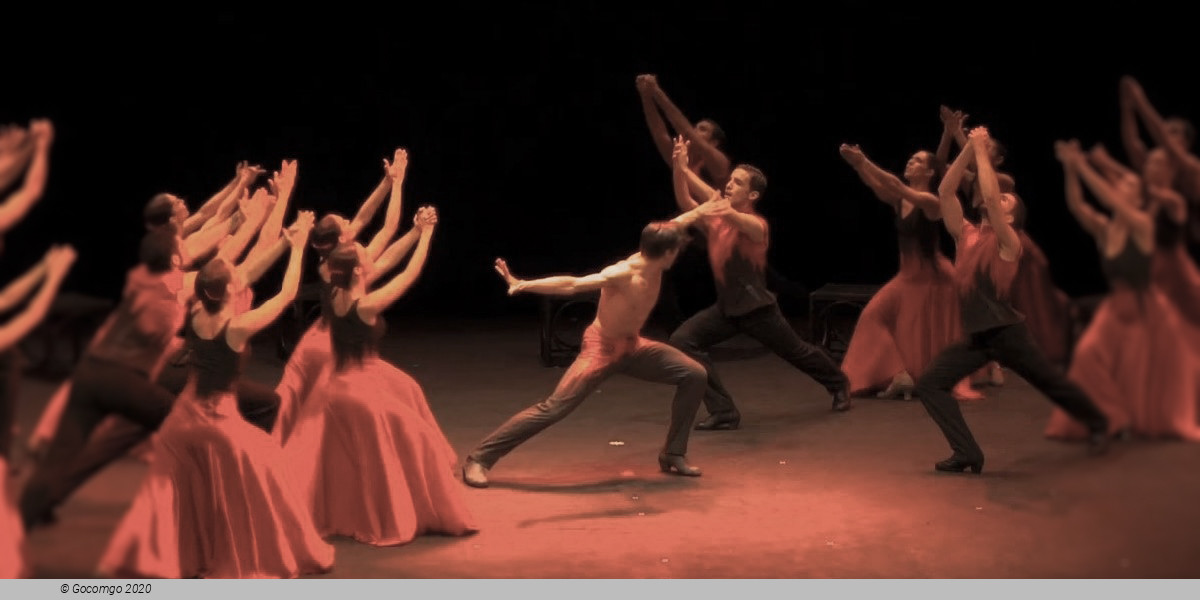
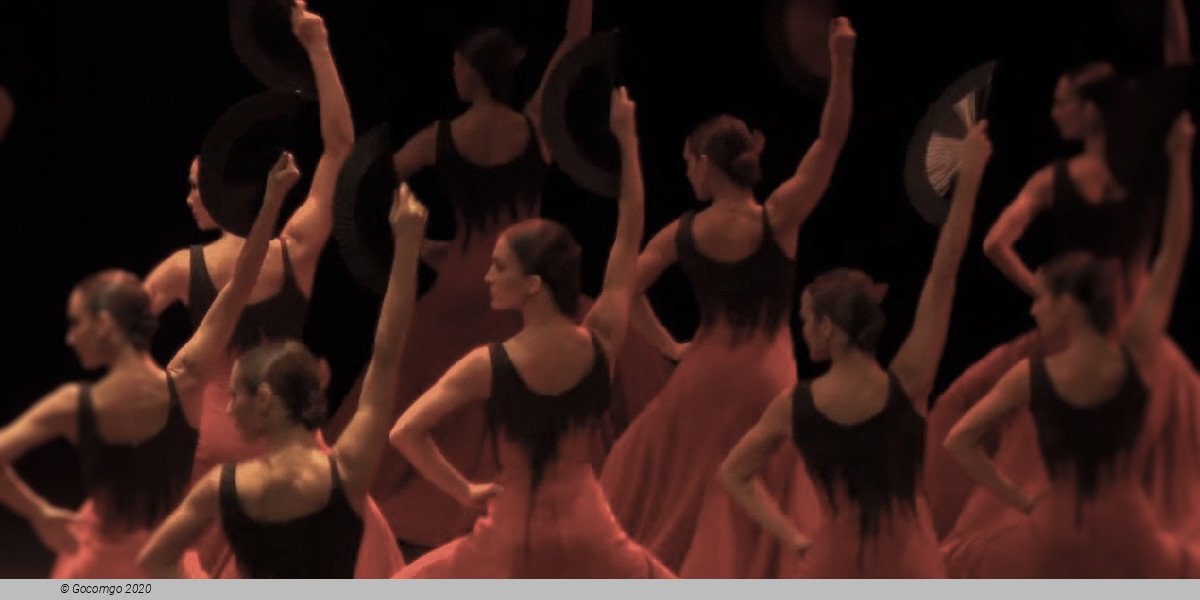
Waves and circles play a role in a different way in the triple bill ballet programme, Waves and Circles – they are extolled, are visible or are tangible.

James Blake’s third album, The Colour in Anything, was released in May 2016. In July that very year William Forsythe had already produced his piece Blake Works I at the Ballet de l’Opéra national de Paris, choreographed around seven of the album’s songs.  Forsythe was therefore truly working with absolutely brand new music. And the fascination with Blake’s voice and the ethereal sounds of his songs continued. Forsythe has since created four more pieces set to music by James Blake, either for dancers and audiences in a venue or for the digital sphere.

A further album of importance for Waves and Circles appeared in 2003, entitled, I trawl the Megahertz. Behind this album is the British musician Paddy McAloon, who, with the album’s re-release in 2019 took on the name of his old band, Prefab Sprout. Due to an eye disease McAloon simply had to listen to the radio for a good while. The sounds on the airwaves and turning the tuner on the radio with snippets of music and snatches of sentences in many ways left their mark on the album and also explain the title. The opening track blows away conventions on several levels. It is 22 minutes long, and instead of singing delivers instrumental sounds with an “overvoicing” in English on a text by McAloon. This exceptional musical creation is the motor for Emma Portner for her new choreography with the Bayerisches Staatsballett.

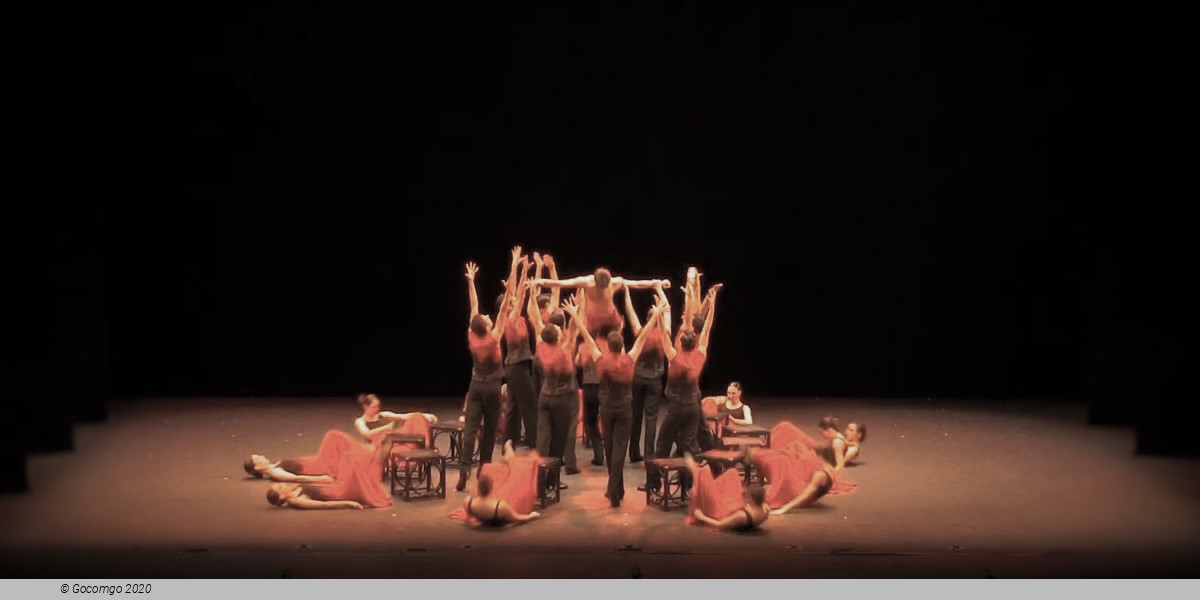
Maurice Ravel wrote his world famous Boléro in 1928, and actually due to an emergency, as the dancer Ida Rubinstein had asked him for a piece of ballet music, so the original plan had to be abandoned due to no fault of his own. Bronislava Nijinska, Vaslav Nijinsky’s sister, created the choreography set to Ravel’s unique music, with which a two-piece melody is constantly repeated for an entire quarter of an hour over an evenly drummed rhythm.   A magnificent crescendo is produced by changing the instrumentation and increasing the volume. Driven by Ravel’s unstoppable rising music, in his own words, Maurice Béjart relates a “story of desire”. Originally, a single woman danced in the centre on a table, surrounded by a horde of men. The gender relations can also be turned around since 1979.

Blake Works I
Choreographer: William Forsythe
Costume Designer: William Forsythe, Dorothee Merg
Lighting: Tanja Rühl
Sound: Niels Lanz

Megahertz
Choreographer Emma Portner
Music Paddy McAloon Prefab Sprout
​​​

Boléro
Choreographer: Maurice Béjart
Music: Maurice Ravel

“My Boléro,” commented Ravel, “has to stick in one’s head!”
More seriously, he explained:
“In 1928, upon request by Madame Rubinstein (Ida Rubinstein, the famous Russian actress and dancer), I composed a Bolero for an orchestra. This is a dance with a very moderate and continuously even movement, both due to its melody and to its harmony and rhythm. The rhythm is continuously marked by the drum. The element of diversity is added by the orchestral crescendo.”

Maurice Béjart describes the creation of Ravel’s work in these terms, “music that is too well-known and yet still fresh due to its simplicity. A melody (originally oriental and not Spanish) that winds slowly around itself, increasing in volume and intensity, devours the sound space and swallows it up at the end of the melody.”

Without further describing a ballet that needs no introduction, let us simply point out that Maurice Béjart returns to the spirit of the Rite of Spring in a very different style. In this sense, unlike most artists who have illustrated Boléro choreographically before him, he spurns the easy choices of a picturesque exterior to simply – but so forcefully – express the essential.

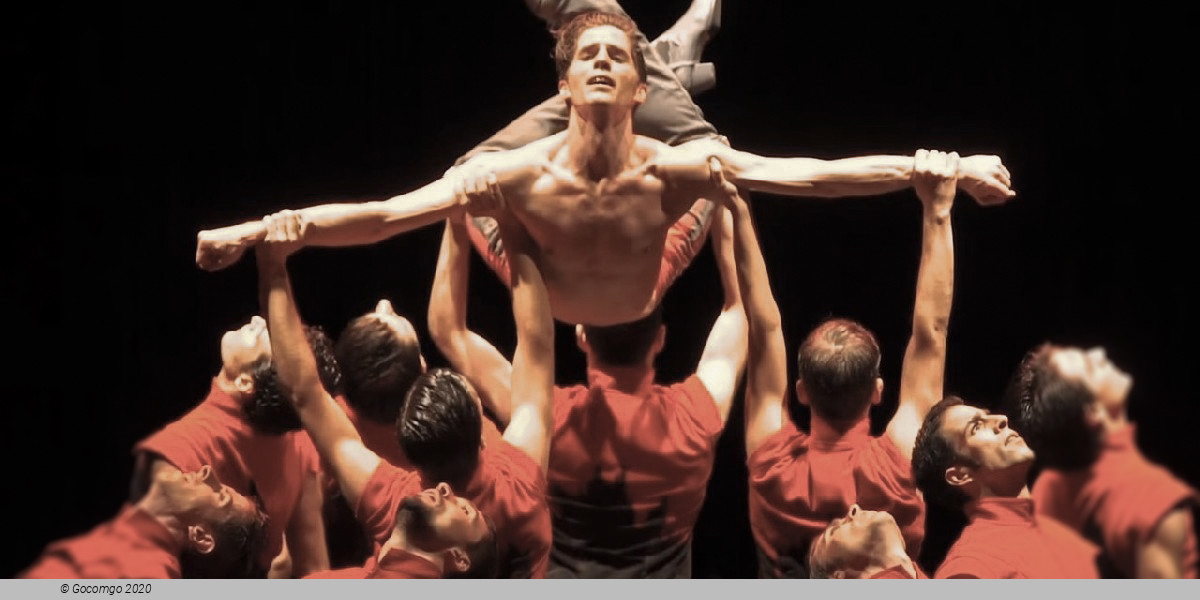
Maurice Béjart gives the central role (La Mélodie) sometimes to a female dancer and other times to a male dancer. The rhythm is interpreted by a group of male dancers.

History
Premiere of this production: 22 November 1928, Paris Opéra

Boléro is a one-movement orchestral piece by the French composer Maurice Ravel (1875–1937). Originally composed as a ballet commissioned by Russian actress and dancer Ida Rubinstein, the piece, which premiered in 1928, is Ravel's most famous musical composition.

Venue Info

Bavarian State Opera - Munich
Location   Max-Joseph-Platz 2

The Bavarian State Opera or the National Theatre (Nationaltheater) on Max-Joseph-Platz in Munich, Germany, is a historic opera house and the main theatre of Munich, home of the Bavarian State Opera, Bavarian State Orchestra, and the Bavarian State Ballet.

During its early years, the National Theatre saw the premières of a significant number of operas, including many by German composers. These included Wagner’s Tristan und Isolde (1865), Die Meistersinger von Nürnberg (1868), Das Rheingold (1869) and Die Walküre (1870), after which Wagner chose to build the Festspielhaus in Bayreuth and held further premières of his works there.

During the latter part of the 19th century, it was Richard Strauss who would make his mark on the theatre in the city in which he was born in 1864. After accepting the position of conductor for a short time, Strauss returned to the theatre to become principal conductor from 1894 to 1898. In the pre-War period, his Friedenstag (1938) and Capriccio were premièred in Munich. In the post-War period, the house has seen significant productions and many world premieres.

First theatre – 1818 to 1823
The first theatre was commissioned in 1810 by King Maximilian I of Bavaria because the nearby Cuvilliés Theatre had too little space. It was designed by Karl von Fischer, with the 1782 Odéon in Paris as architectural precedent. Construction began on 26 October 1811 but was interrupted in 1813 by financing problems. In 1817 a fire occurred in the unfinished building.

The new theatre finally opened on 12 October 1818 with a performance of Die Weihe by Ferdinand Fränzl, but was soon destroyed by another fire on 14 January 1823; the stage décor caught fire during a performance of Die beyden Füchse by Étienne Méhul and the fire could not be put out because the water supply was frozen. Coincidentally the Paris Odéon itself burnt down in 1818.

Second theatre – 1825 to 1943
Designed by Leo von Klenze, the second theatre incorporated Neo-Grec features in its portico and triangular pediment and an entrance supported by Corinthian columns. In 1925 it was modified to create an enlarged stage area with updated equipment. The building was gutted in an air raid on the night of 3 October 1943.

Third theatre – 1963 to present
The third and present theatre (1963) recreates Karl von Fischer's original neo-classical design, though on a slightly larger, 2,100-seat scale. The magnificent royal box is the center of the interior rondel, decorated with two large caryatids. The new stage covers 2,500 square meters (3,000 sq yd), and is thus the world's third largest, after the Opéra Bastille in Paris and the Grand Theatre, Warsaw.

Through the consistent use of wood as a building material, the auditorium has excellent acoustics. Architect Gerhard Moritz Graubner closely preserved the original look of the foyer and main staircase. It opened on 21 November 1963 with an invitation-only performance of Die Frau ohne Schatten under the baton of Joseph Keilberth. Two nights later came the first public performance, of Die Meistersinger von Nürnberg, again under Keilberth.

Important Info
Type: Modern Ballet
City: Munich, Germany
Duration: 2h with 2 intervals
Acts: 3
Intervals: 2

E-tickets: Print at home or at the box office of the event if so specified. You will find more information in your booking confirmation email.

You can only select the category, and not the exact seats.
If you order 2 or 3 tickets: your seats will be next to each other.
If you order 4 or more tickets: your seats will be next to each other, or, if this is not possible, we will provide a combination of groups of seats (at least in pairs, for example 2+2 or 2+3).

From
$ 114
Top of page