
Winspear Opera House tickets 29 November 2026 - The Nutcracker | GoComGo.com

The Nutcracker

Winspear Opera House, Dallas, USA
All photos (14)
Select date and time
2 PM
From
US$ 99

E-tickets: Print at home or at the box office of the event if so specified. You will find more information in your booking confirmation email.

You can only select the category, and not the exact seats.
If you order 2 or 3 tickets: your seats will be next to each other.
If you order 4 or more tickets: your seats will be next to each other, or, if this is not possible, we will provide a combination of groups of seats (at least in pairs, for example 2+2 or 2+3).

Important Info
Type: Ballet
City: Dallas, USA
Starts at: 14:00

E-tickets: Print at home or at the box office of the event if so specified. You will find more information in your booking confirmation email.

You can only select the category, and not the exact seats.
If you order 2 or 3 tickets: your seats will be next to each other.
If you order 4 or more tickets: your seats will be next to each other, or, if this is not possible, we will provide a combination of groups of seats (at least in pairs, for example 2+2 or 2+3).

Cast
Performers
Ballet company: Texas Ballet Theater
Creators
Composer: Pyotr Tchaikovsky
Choreographer: Ben Stevenson
Author: Ernst Theodor Amadeus Hoffmann
Librettist: Marius Petipa
Overview

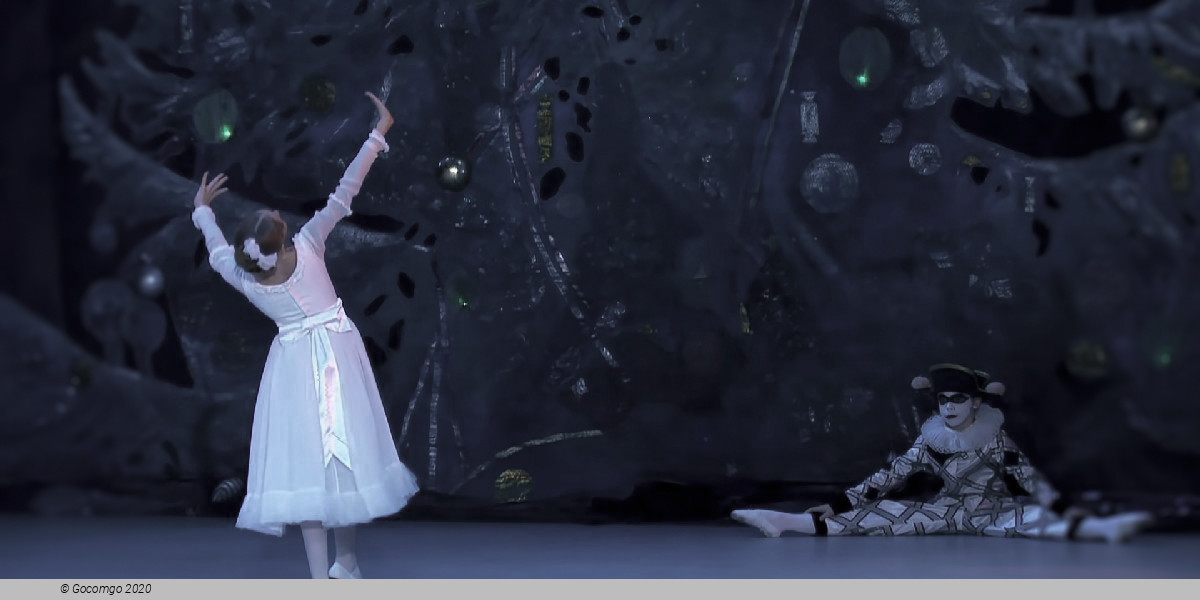
The Nutcracker is Texas Ballet Theater's beloved holiday production featuring Ben Stevenson's acclaimed choreography set to Tchaikovsky's timeless score. Follow young Clara on a magical Christmas Eve journey from a festive family celebration to the enchanting Kingdom of Sweets, where toy soldiers, dancing snowflakes, and the Sugar Plum Fairy bring holiday wonder to life.

When the clock strikes midnight, young Clara embarks on a magical adventure unlike any other. Ben Stevenson's celebrated production of The Nutcracker transforms Tchaikovsky's beloved score into a dazzling holiday spectacle filled with breathtaking dancing, magnificent costumes, and enchanting stagecraft.

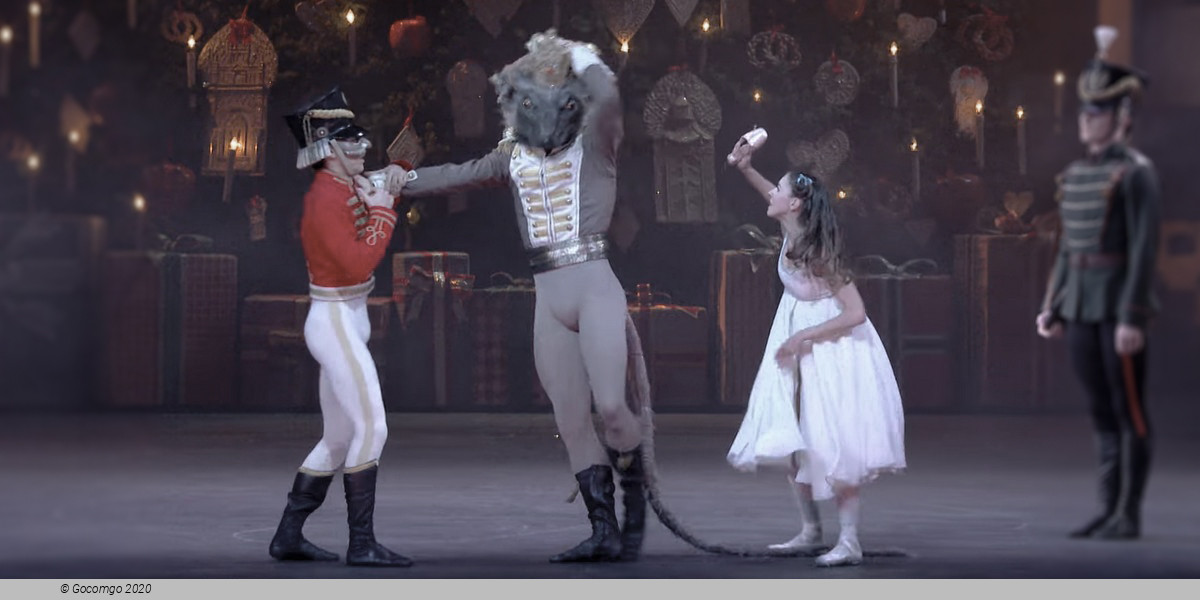
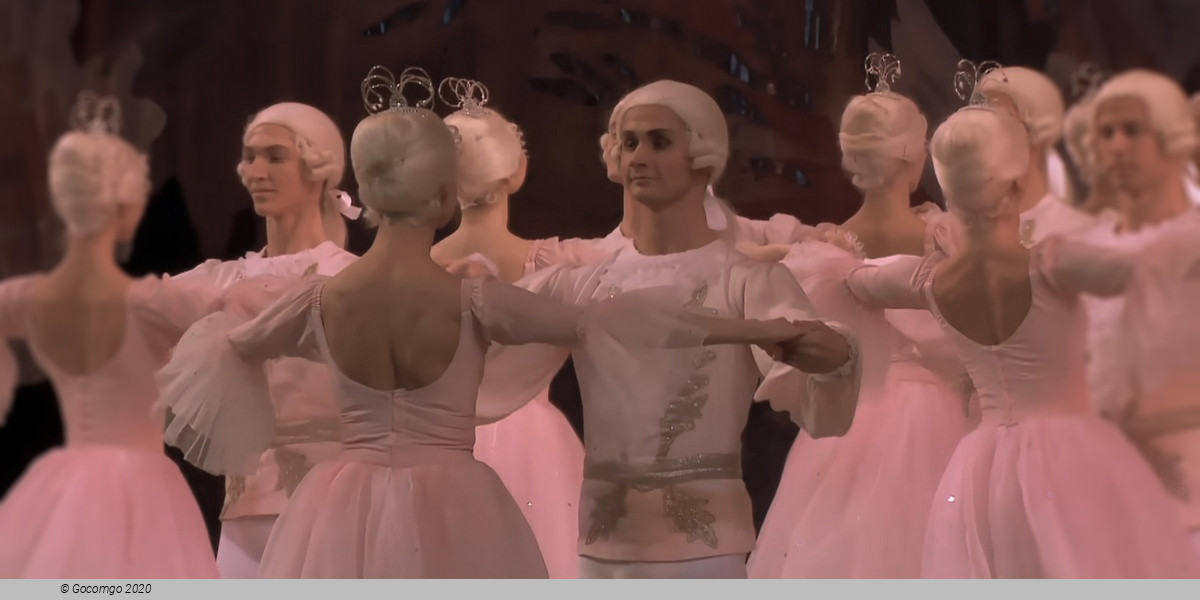
From the battle between toy soldiers and the Mouse King to the glittering Waltz of the Snowflakes and the grand celebrations in the Kingdom of Sweets, every scene is designed to capture the wonder and imagination of the holiday season. For generations, this production has become a cherished Christmas tradition for families across Texas.

History
Premiere of this production: 06 December 1892, Imperial Mariinsky Theatre, Saint Petersburg

The Nutcracker (Balet-feyeriya) is a two-act ballet, originally choreographed by Marius Petipa and Lev Ivanov with a score by Pyotr Ilyich Tchaikovsky (Op. 71). The libretto is adapted from E. T. A. Hoffmann's story "The Nutcracker and the Mouse King".

Synopsis

Plot 

Below is a synopsis based on the original 1892 libretto by Marius Petipa. The story varies from production to production, though most follow the basic outline. The names of the characters also vary. In the original E. T. A. Hoffmann story, the young heroine is called Marie Stahlbaum and Clara (Klärchen) is her doll's name. In the adaptation by Dumas on which Petipa based his libretto, her name is Marie Silberhaus. In still other productions, such as Baryshnikov's, Clara is Clara Stahlbaum rather than Clara Silberhaus.

Act I

Scene 1: The Stahlbaum Home

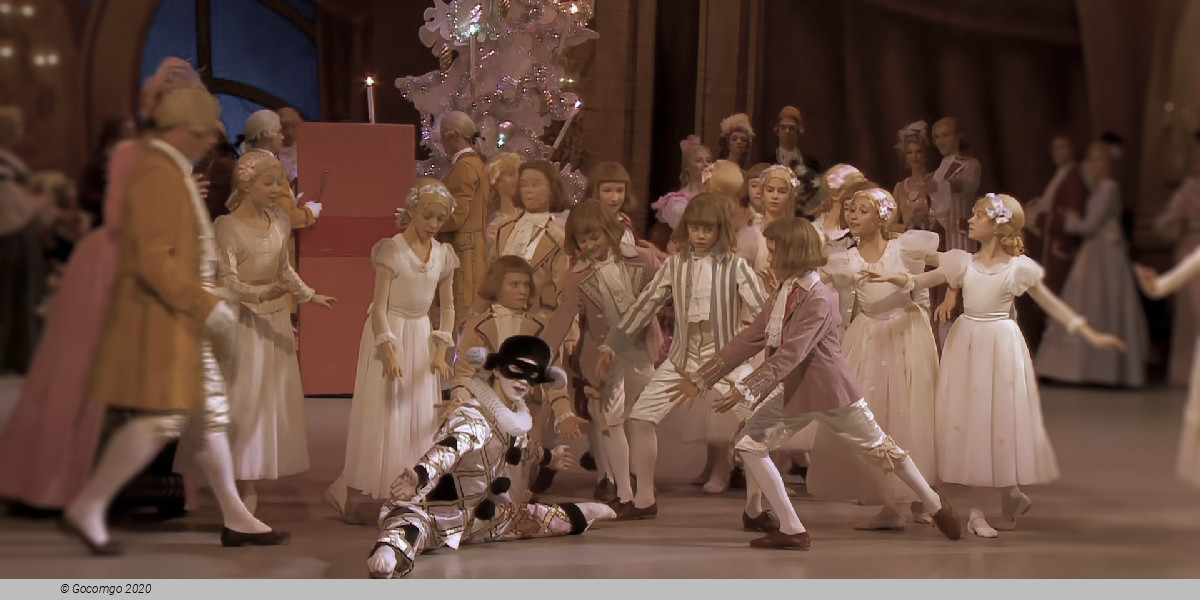
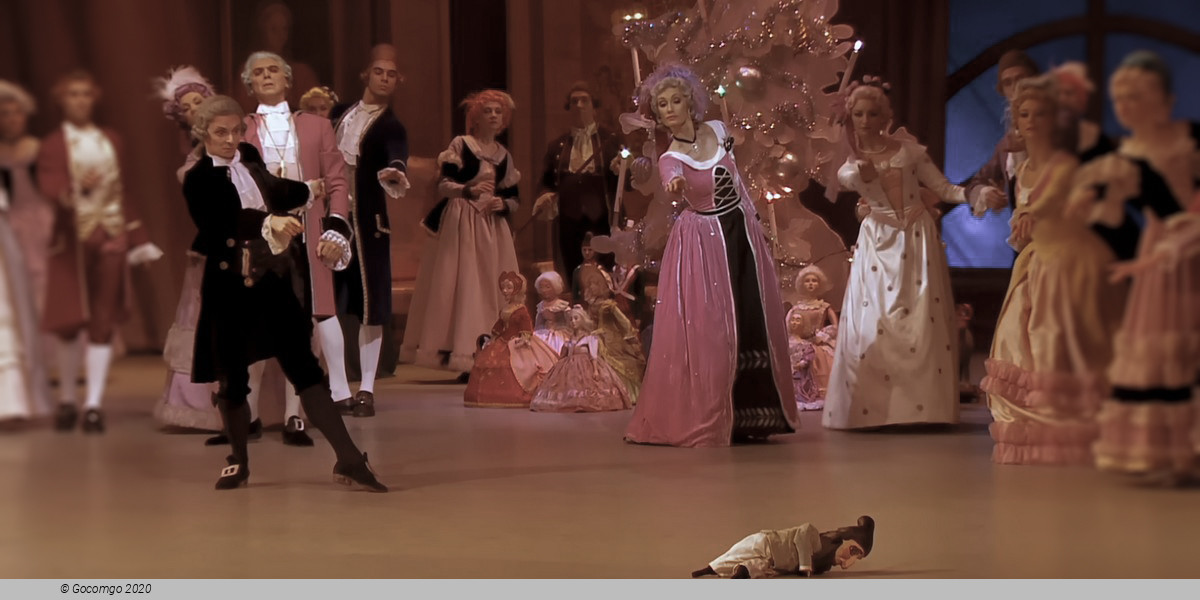
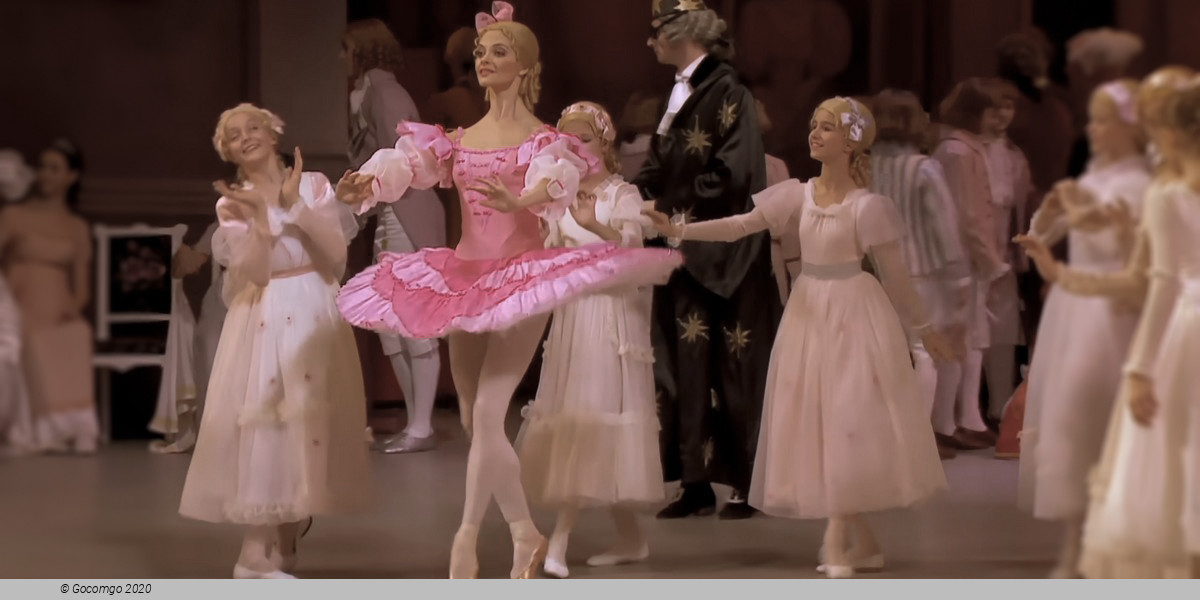
It is Christmas Eve. Family and friends have gathered in the parlor to decorate the beautiful Christmas tree in preparation for the party. Once the tree is finished, the children are sent for. They stand in awe of the tree sparkling with candles and decorations.

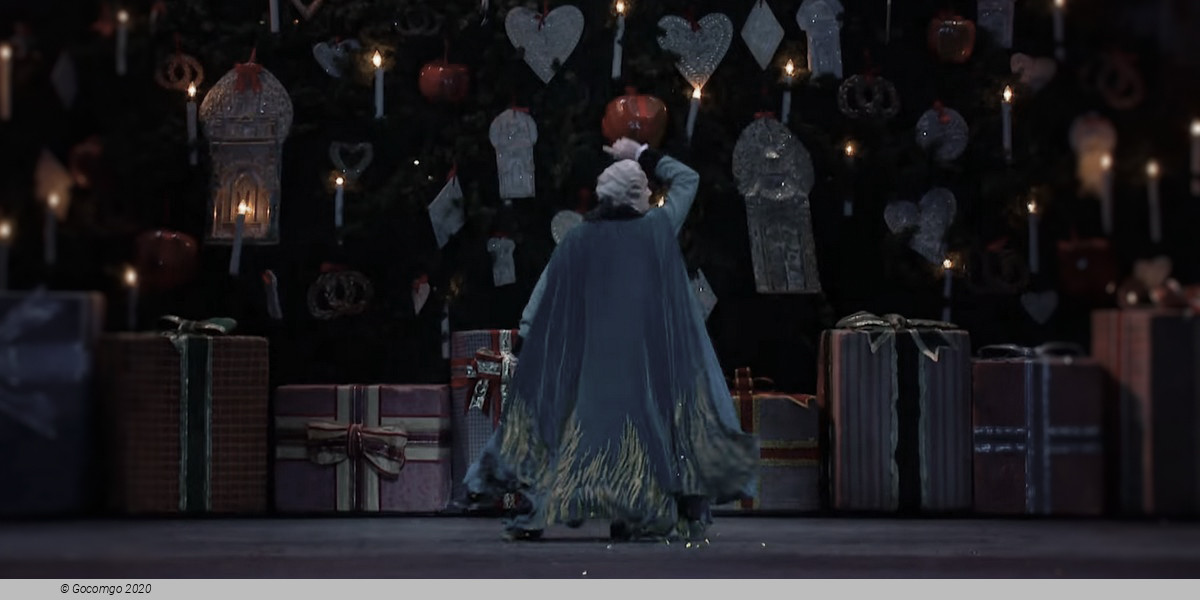
The party begins. A march is played. Presents are given out to the children. Suddenly, as the owl-topped grandmother clock strikes eight, a mysterious figure enters the room. It is Drosselmeyer, a local councilman, magician, and Clara's godfather. He is also a talented toymaker who has brought with him gifts for the children, including four lifelike dolls who dance to the delight of all. He then has them put away for safekeeping.

Clara and Fritz are sad to see the dolls being taken away, but Drosselmeyer has yet another toy for them: a wooden nutcracker carved in the shape of a little man. The other children ignore it, but Clara immediately takes a liking to it. Fritz, however, breaks it, and Clara is heartbroken.

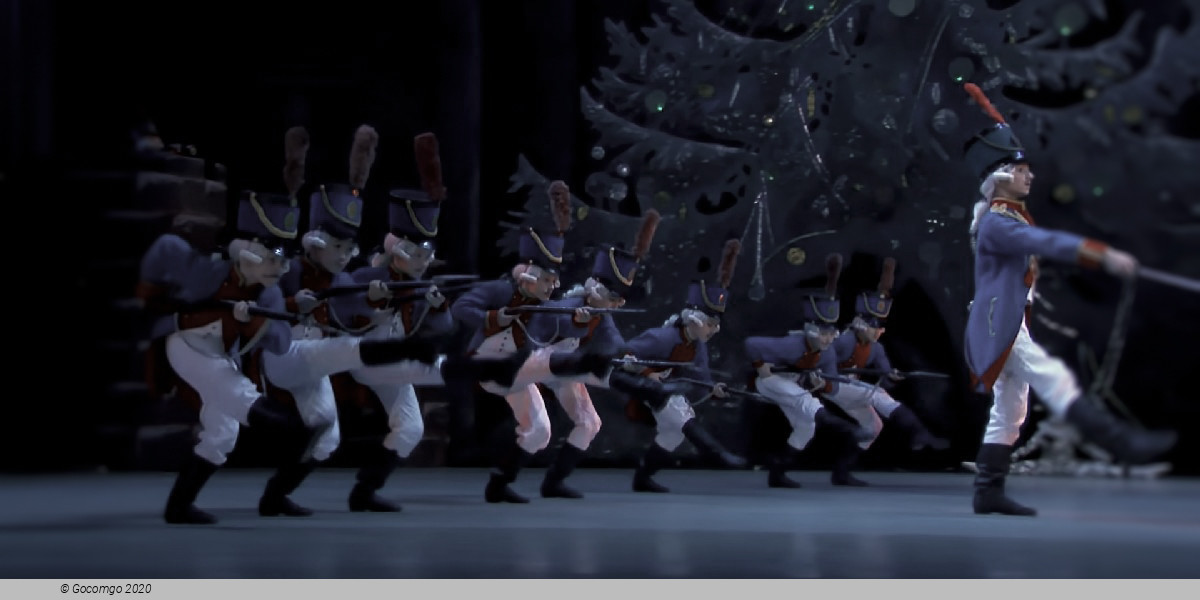
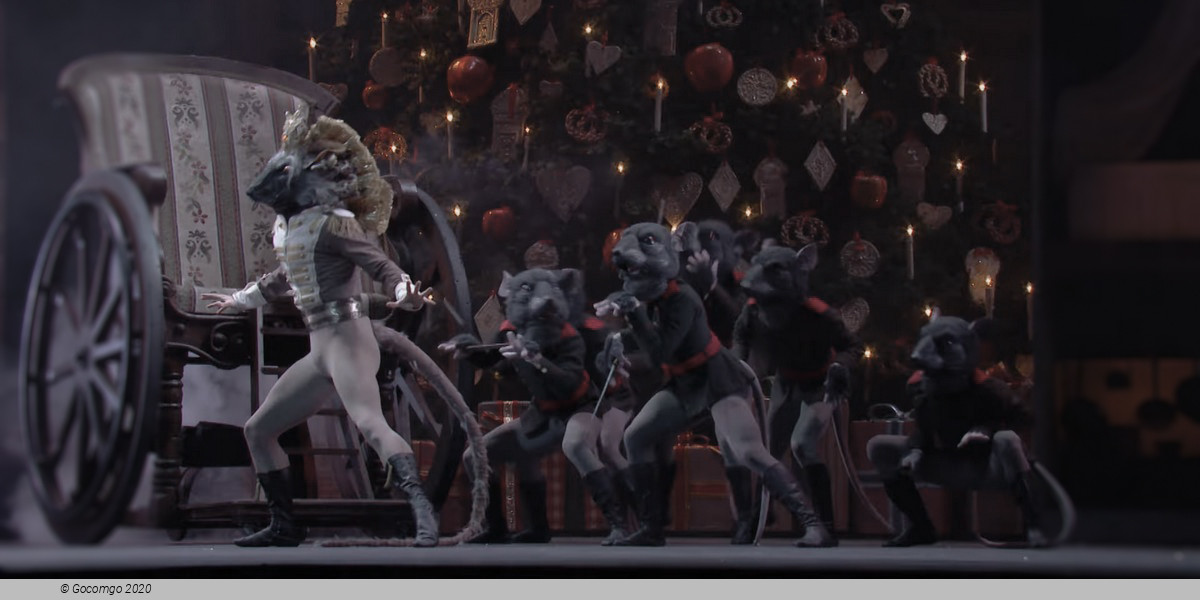
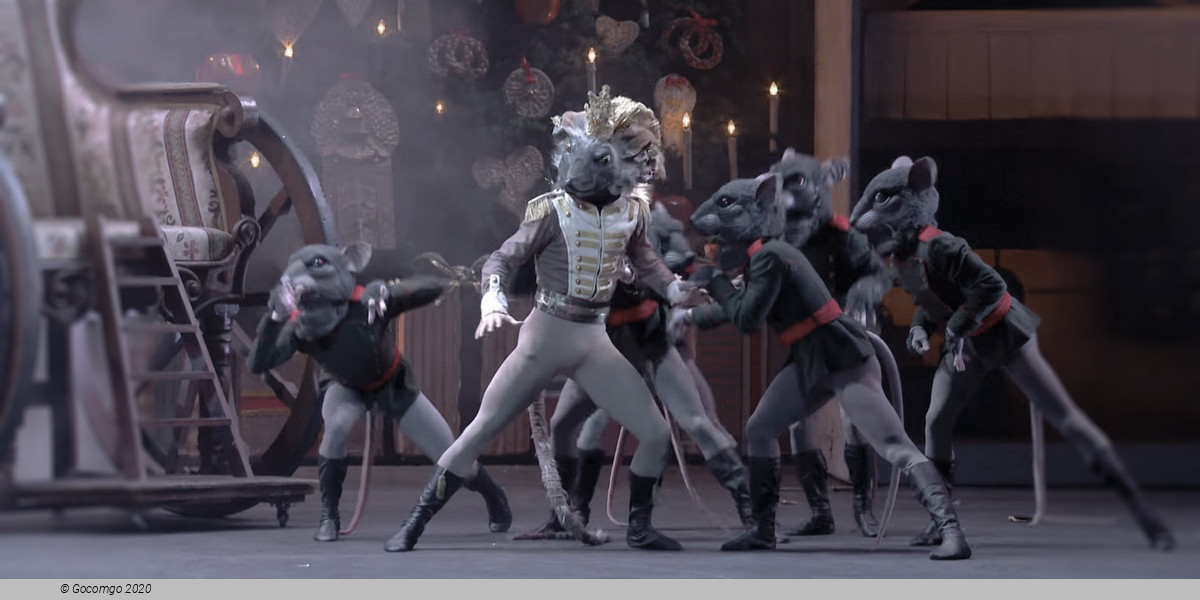
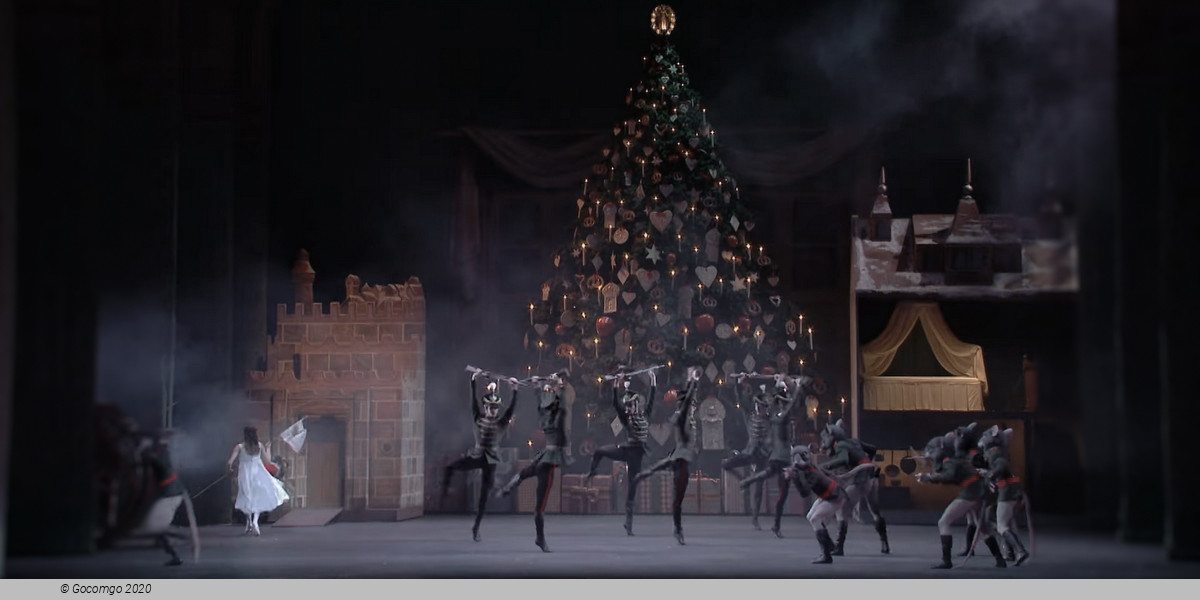
During the night, after everyone else has gone to bed, Clara returns to the parlor to check on her beloved nutcracker. As she reaches the little bed, the clock strikes midnight and she looks up to see Drosselmeyer perched atop it. Suddenly, mice begin to fill the room and the Christmas tree begins to grow to dizzying heights. The nutcracker also grows to life size. Clara finds herself in the midst of a battle between an army of gingerbread soldiers and the mice, led by their king. They begin to eat the soldiers.

The nutcracker appears to lead the soldiers, who are joined by tin soldiers, and by dolls who serve as doctors to carry away the wounded. As the Mouse King advances on the still-wounded nutcracker, Clara throws her slipper at him, distracting him long enough for the nutcracker to stab him.

Scene 2: A Pine Forest

The mice retreat and the nutcracker is transformed into a handsome Prince. He leads Clara through the moonlit night to a pine forest in which the snowflakes dance around them, beckoning them on to his kingdom as the first act ends.

Act II

Scene 1: The Land of Sweets

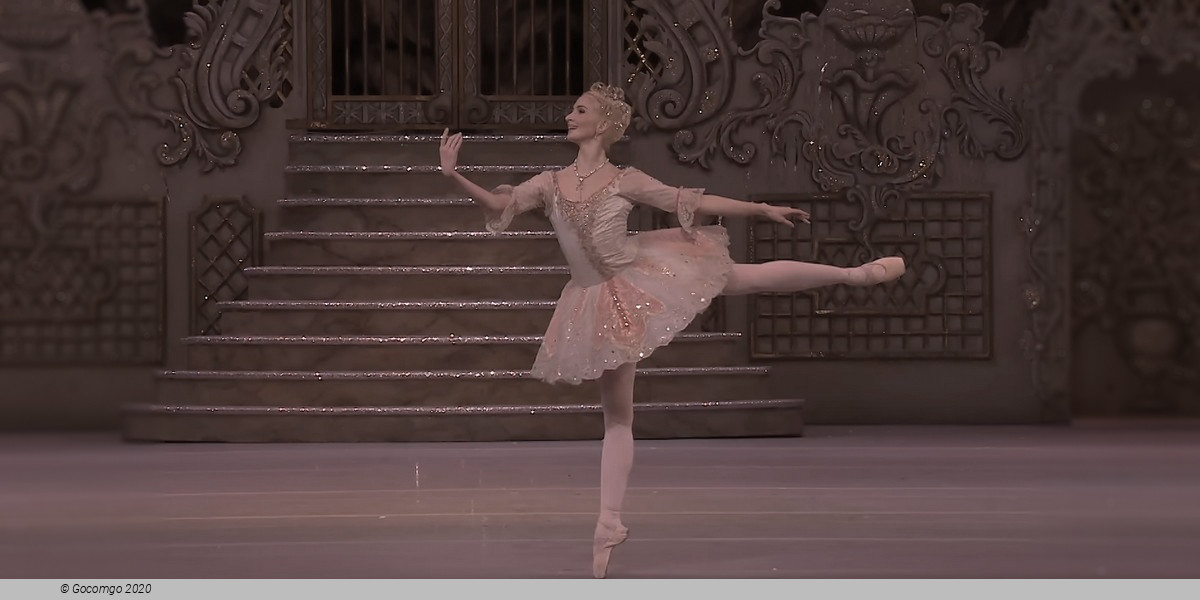
Clara and the Prince travel to the beautiful Land of Sweets, ruled by the Sugar Plum Fairy in the Prince's place until his return. He recounts for her how he had been saved from the Mouse King by Clara and transformed back into himself. In honor of the young heroine, a celebration of sweets from around the world is produced: chocolate from Spain, coffee from Arabia, tea from China, and candy canes from Russia all dance for their amusement; Danish shepherdesses perform on their flutes; Mother Ginger has her children, the Polichinelles, emerge from under her enormous hoop skirt to dance; a string of beautiful flowers perform a waltz. To conclude the night, the Sugar Plum Fairy and her Cavalier perform a dance.

A final waltz is performed by all the sweets, after which the Sugar Plum Fairy ushers Clara and the Prince down from their throne. He bows to her, she kisses Clara goodbye, and leads them to a reindeer drawn sleigh. It takes off as they wave goodbye to all the subjects who wave back.

In the original libretto, the ballet's apotheosis "represents a large beehive with flying bees, closely guarding their riches". Just like Swan Lake, there have been various alternative endings created in productions subsequent to the original.

Venue Info

Winspear Opera House - Dallas
Location   2403 Flora St

The Margot and Bill Winspear Opera House is an opera house (one of four venues in the AT&T Performing Arts Center) located in the Arts District of downtown Dallas, Texas (USA). Designed as a 21st-century reinterpretation of the traditional opera house, the Winspear seats 2,200 (with a capacity of 2,300) in a traditional horseshoe configuration. The facility is the home of The Dallas Opera (which until the 2008/2009 season performed at the Music Hall at Fair Park) and the Texas Ballet Theater.

History

Groundbreaking for the AT&T Performing Arts Center and Winspear Opera House was held in October 2006. The venue was designed by Foster and Partners (principal architect: Spencer de Grey) and made possible in part by a $42-million gift from Margot and Bill Winspear, for whom the facility is named. The London firm Sound Space Design (principal acoustician: Robert Essert) developed the acoustical design of the opera house and the acoustics were engineered specifically for performances of opera and musical theater. Theatre planning and theatre equipment design was by Theatre Projects Consultants. The stages were also equipped with appropriate flooring for performances of ballet and other forms of dance.

The opera house was presented to the public with tours and performances during the center's opening week, October 12 – 18, 2009. The first opera performance took place on October 23, 2009, with Verdi's Otello, conducted by Graeme Jenkins.

Design Features

The Annette and Harold Simmons Signature Glass Façade wrap around the building, creating transparency between the opera house and the surrounding Performance Park. An 84-foot (26 m) wide section of the glass façade is retractable to a height of 23 feet (7.0 m), literally opening up the Grand Lobby, Cafe, and Box Circle-level Restaurant to Performance Park.

The Grand Portico, radiating from the opera house on all sides, provides shade over 3 acres (12,000 m2) of the Performance Park. The solar canopy's louvers are arranged at fixed angles following the path of the sun. By eliminating the most direct sunlight on the façade and by creating a cooler microclimate around the building, the canopy significantly reduces the energy requirements of the Winspear Opera House.

In May 2009 artist Guillermo Kuitca was commissioned to design the stage curtain. The design abstracts the seating plan for Winspear's Margaret McDermott Performance Hall and reproduces this image onto the curtain itself.

A key design feature is the 318-rod chandelier located inside the performance hall, named The Moody Foundation Chandelier. The chandelier hangs 50 feet below the ceiling. Starting Friday, June 28, 2013, the traditional pre-performance ascent of The Moody Chandelier has been accompanied by an exclusively adapted piece “The Light” by American composer Philip Glass. Once retracted into the ceiling, it leaves the impression of a star-lit night, as each rod has the ability to "twinkle." The acrylic rods are illuminated by three primary color LEDs which allows the chandelier to be lit in virtually any color.

Important Info
Type: Ballet
City: Dallas, USA
Starts at: 14:00
Top of page