
Mariinsky Theatre: Anna Bolena. Performance by the Stanislavsky Music Theatre Tickets | Event Dates & Schedule | GoComGo.com

Anna Bolena. Performance by the Stanislavsky Music Theatre Tickets

Mariinsky Theatre, Saint Petersburg, Russia
All photos (6)
1 / 6
Available Dates: 6 - 8 Oct, 2026 (2 events)
Important Info
Type: Opera
City: Saint Petersburg, Russia
Duration: 4h with 2 intervals
Acts: 3
Intervals: 2
Sung in: Italian

E-tickets: Print at home or at the box office of the event if so specified. You will find more information in your booking confirmation email.

You can only select the category, and not the exact seats.
If you order 2 or 3 tickets: your seats will be next to each other.
If you order 4 or more tickets: your seats will be next to each other, or, if this is not possible, we will provide a combination of groups of seats (at least in pairs, for example 2+2 or 2+3).

Cast
Performers
Choose the date to see the peformers
Creators
Composer: Gaetano Donizetti
Librettist: Felice Romani
Opera Company: Stanislavsky Theatre Opera
Overview

Don’t miss this exceptional premiere — a powerful bel canto tragedy performed by the finest voices of the Russian opera stage.

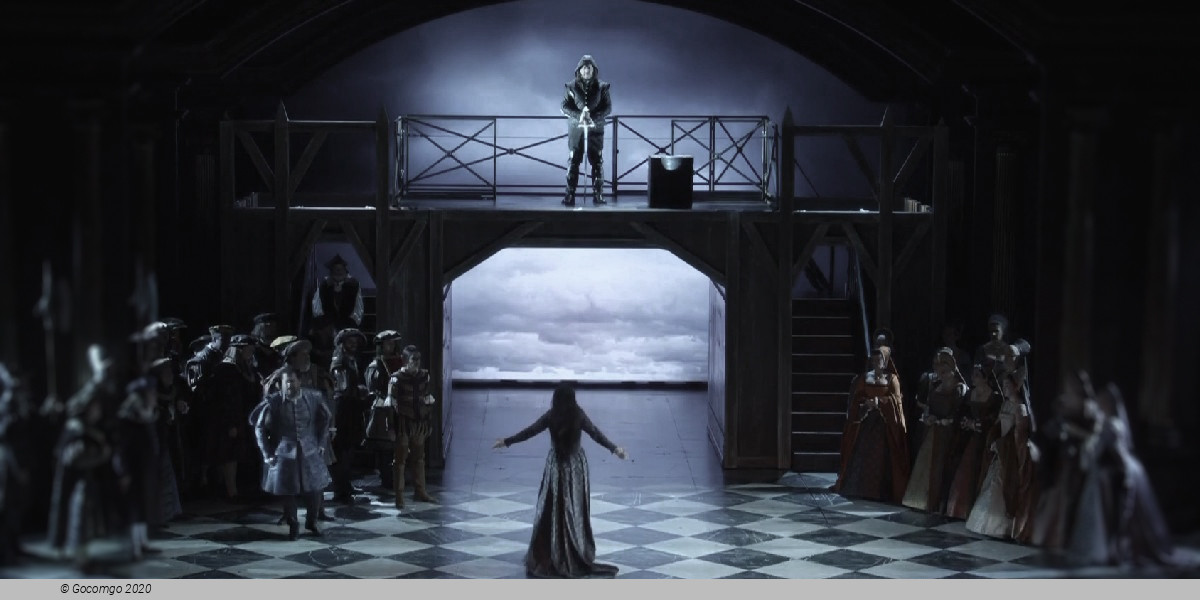
The Moscow Stanislavsky and Nemirovich-Danchenko Academic Music Theatre presents the Gaetano Donizetti’s opera Anna Bolena, staged by director Sergey Novikov.

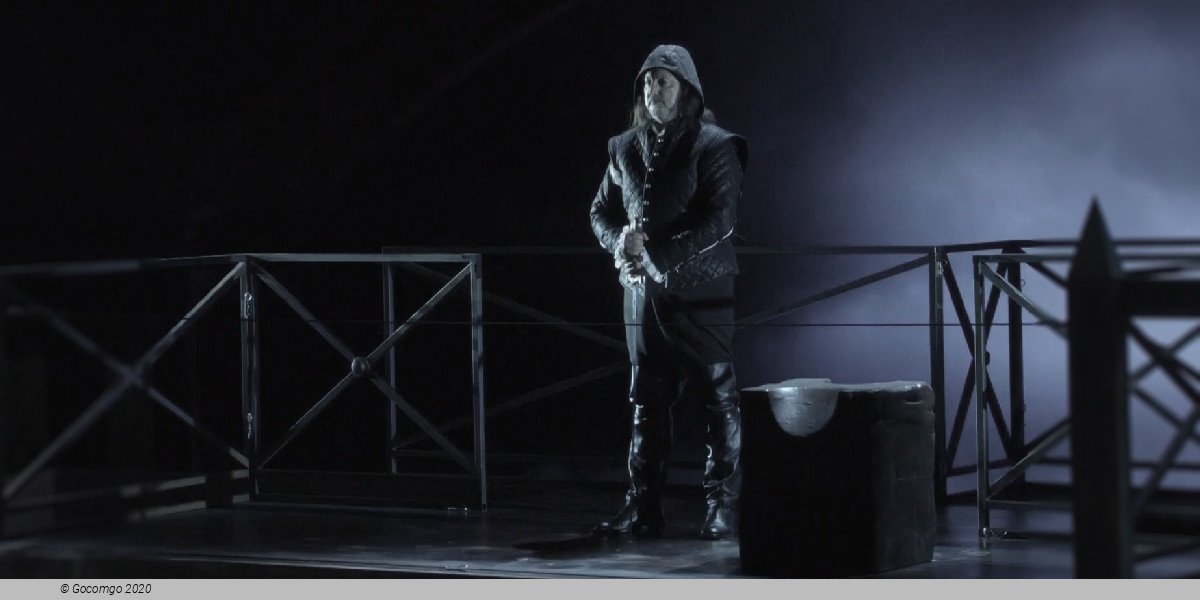
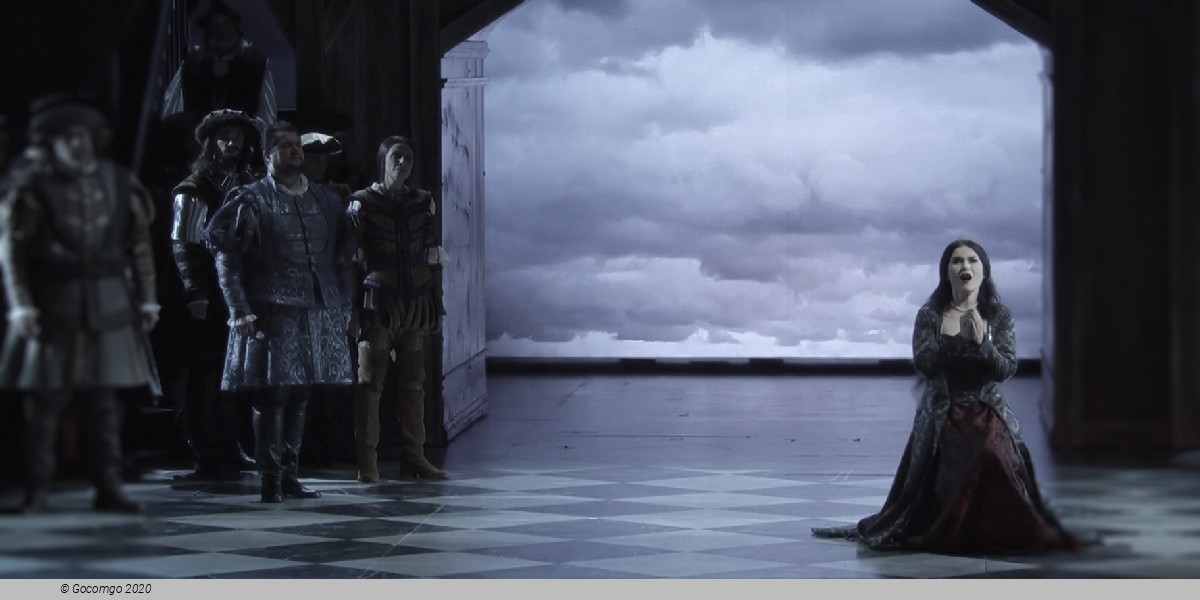
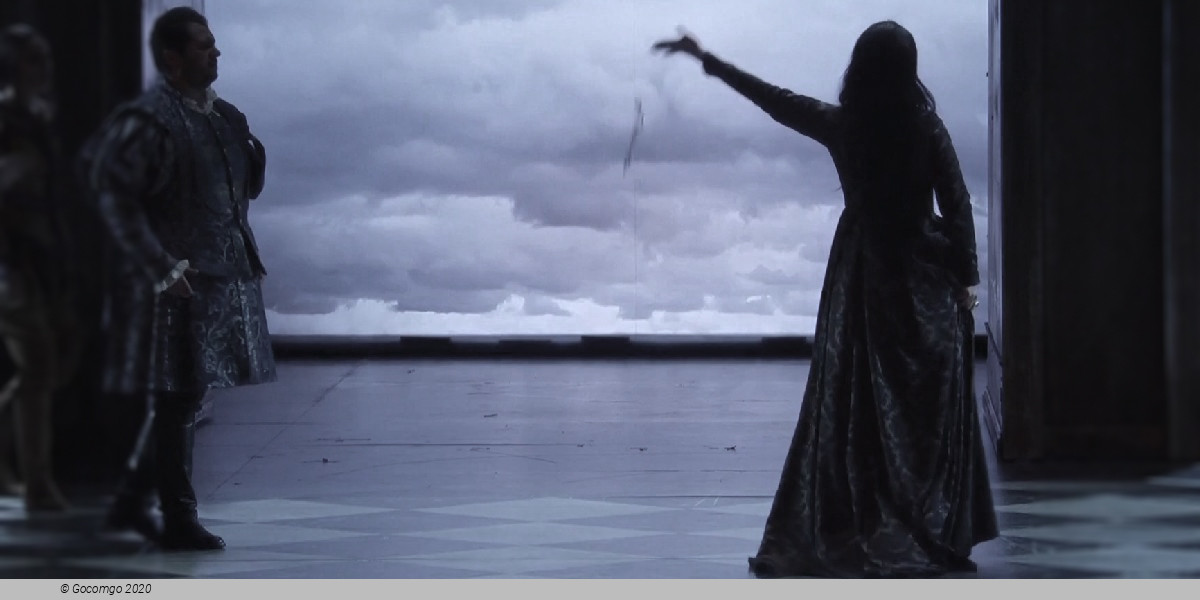
Scenography and costumes are designed by Ivan Skladchikov, with lighting by Damir Ismagilov.

The world premiere of Anna Bolena took place almost 200 years ago — in 1830 in Milan. It was Donizetti’s 33rd opera and marked a turning point in his career. Although he was already celebrated as a master of comic opera, this lyrical tragedy brought him international acclaim and established him as one of the leading Italian composers of his time.

For the Russian opera stage, Anna Bolena remains a rarity — largely because it requires an exceptional command of bel canto style and great dramatic sensitivity from its performers.

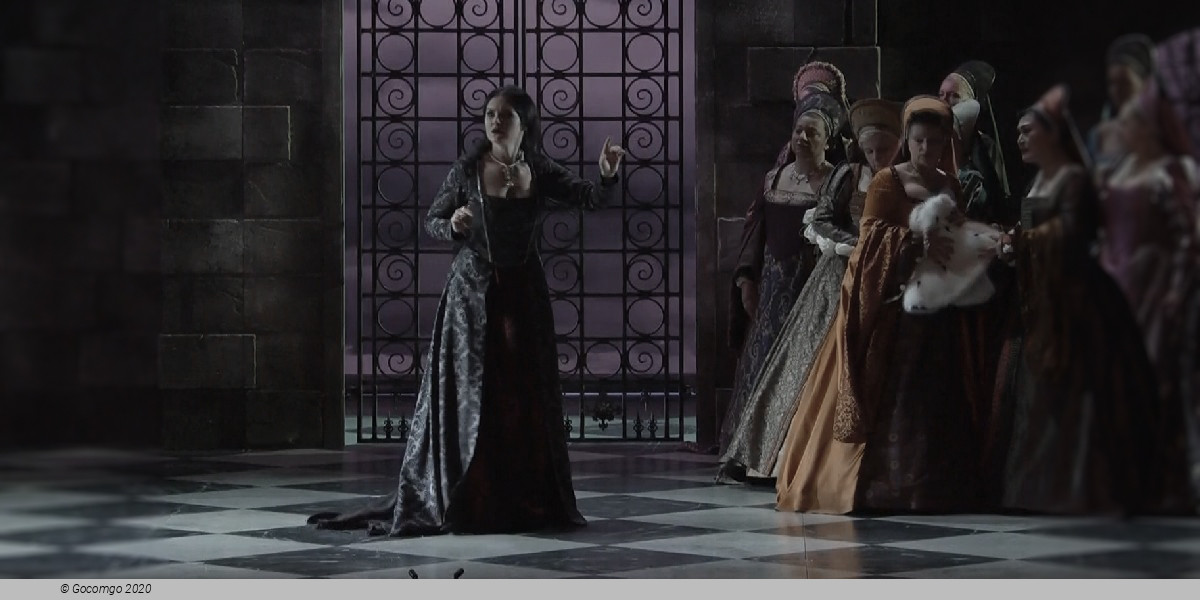
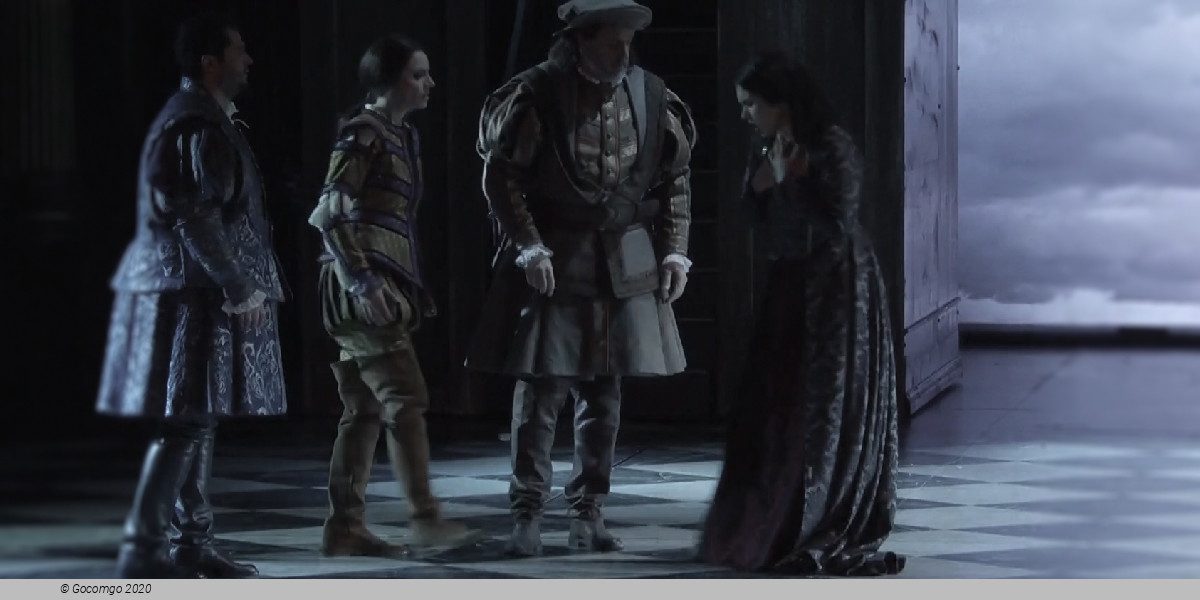
Sergey Novikov remains faithful to the original libretto and dramatic structure of the work. The action unfolds, as Donizetti intended, in 16th-century England during the Tudor reign. Against the backdrop of royal splendour, and the ruthless intrigues of the court, the tragic fate of Anne Boleyn, second wife of King Henry VIII, is revealed.

The scenic design by Ivan Skladchikov also serves the historical authenticity of the production, recreating the period with meticulous detail: from castle interiors and tapestry art to costumes in the fashion of the 16th century.

History
Premiere of this production: 26 December 1830, Teatro Carcano, Milan

Anna Bolena is a tragic opera (tragedia lirica) in two acts composed by Gaetano Donizetti. Felice Romani wrote the Italian libretto after Ippolito Pindemonte's Enrico VIII ossia Anna Bolena and Alessandro Pepoli's Anna Bolena, both recounting the life of Anne Boleyn, the second wife of England's King Henry VIII.

Synopsis

Time: 1536
Place: Windsor and London

Act 1
Scene One: Night. Windsor Castle, Queen's apartments

Courtiers comment that the queen’s star is setting, because the king’s fickle heart burns with another love.

Jane Seymour enters to attend a call by the Queen; Anna enters and notes that people seem sad. The queen admits to Jane that she is troubled. At the queen’s request, her page Smeaton plays the harp and sings in an attempt to cheer the people present. The queen asks him to stop. Unheard by any one else, she says to herself that the ashes of her first love are still burning, and that she is now unhappy in her vain splendor. All leave, except Jane.

Henry VIII enters and tells Jane that soon she will have no rival, that the altar has been prepared for her, and that she will have husband, sceptre, and throne. Each leaves by a different door.

Scene Two: Day. Around Windsor Castle

Lord Rochefort, Anna’s brother, is surprised to meet Lord Richard Percy, who has been called back to England from exile by Henry VIII. Percy asks if it is true that the Queen is unhappy and that the King has changed. Rochefort answers that love is never content.

Hunters enter. Percy is agitated at the prospect of possibly seeing Anna, who was his first love. Henry and Anna enter and express surprise at seeing Percy. Henry does not allow Percy to kiss his hand, but says that Anna has given him assurances of Percy’s innocence but she still has feelings for Percy. Henry VIII tells Hervey, an officer of the king, to spy on every step and every word of Anna and Percy.

Scene Three: Windsor Castle, close to the Queen's apartments

Smeaton takes a locket from his breast containing Anna’s portrait. He has stolen it and has come to return it. He hears a sound and hides behind a screen. Anna and Rochefort enter. Rochefort asks Anna to hear Percy. Then he leaves. Smeaton peeps out from behind the screen, but cannot escape. Percy enters. Percy says that he sees that Anna is unhappy. She tells him that the king now loathes her. Percy says that he still loves her. Anna tells him not to speak to her of love. Before leaving, Percy asks whether he can see Anna again. She says no. He draws his sword to stab himself, and Anna screams. In the mistaken belief that Percy is attacking Anna, Smeaton rushes out from behind the screen. Smeaton and Percy are about to fight. Anna faints, and Rochefort rushes in. Just then, Henry VIII enters and sees the unsheathed swords. Summoning attendants, he says that these persons have betrayed their king. Smeaton says that it is not true, and tears open his tunic to offer his breast to the king for slaying if he is lying. The locket with Anna’s portrait falls at the king’s feet. The king snatches it up. He orders that the offenders be dragged to dungeons. Anna says to herself that her fate is sealed.

Act 2

Scene One: London. Antechamber of the Queen's apartments

The guards note that even Jane Seymour has stayed away from Anna. Anna enters with a retinue of ladies, who tell her to place her trust in heaven. Hervey enters and says that the Council of Peers has summoned the ladies into its presence. The ladies leave with Hervey. Jane enters and says that Anna can avoid being put to death by admitting guilt. Anna says that she will not buy her life with infamy. She expresses the hope that her successor will wear a crown of thorns. Jane admits that she is to be the successor. Anna tells her to leave, but says that Henry VIII alone is the guilty one. Jane leaves, deeply upset.

Scene Two: Antechamber leading into the hall where the Council of Peers is meeting

Hervey tells courtiers that Anna is lost, because Smeaton has talked and has revealed a crime. Henry VIII enters. Hervey says that Smeaton has fallen into the trap. Henry VIII tells Hervey to continue to let Smeaton believe that he has saved Anna's life. Anna and Percy are brought in, separately. Henry VIII says that Anna has made love to the page Smeaton, and that there are witnesses. He says that both Anna and Percy will die. Percy says that it is written in heaven that he and Anna are married. They are led away by guards.

Jane enters. She says that she does not want to be the cause of Anna's death. Henry VIII says that she will not save Anna by leaving. Hervey enters and says that the Council has dissolved the royal marriage and has condemned Anna and her accomplices to death. Courtiers and Jane ask the king to be merciful. He tells them to leave.

Scene Three: Tower of London

Percy and Rochefort are together in their cell. Hervey enters and says that the king has pardoned them. They ask about Anna. Hearing that she is to be executed, they choose to be executed also. They leave, surrounded by guards.

In Anna's cell, a chorus of ladies comment on her madness and grief. Anna enters, she imagines that it is her wedding day to the king. Then she imagines that she sees Percy, and she asks him to take her back to her childhood home (Donizetti used the theme from the English/American song Home Sweet Home as part of Anna’s Mad Scene to underscore her longing). Percy, Rochefort and Smeaton are brought in. Smeaton throws himself at Anna's feet and says that he accused her in the belief that he was saving her life. In her delirium, Anna asks him why he is not playing his lute. The sound of cannon is heard. Anna comes to her senses. She is told that Jane and Henry VIII are being acclaimed by the populace on their wedding day. Anna says that she does not invoke vengeance on the wicked couple. She faints. Guards enter to lead the prisoners to the block. Smeaton, Percy and Rochefort say that one victim has already been sacrificed.

Venue Info

Mariinsky Theatre - Saint Petersburg
Location   1 Theatre Square

The Mariinsky Theatre is a historic theatre of opera and ballet in Saint Petersburg, Russia. Opened in 1860, it became the preeminent music theatre of late 19th-century Russia, where many of the stage masterpieces of Tchaikovsky, Mussorgsky, and Rimsky-Korsakov received their premieres. Through most of the Soviet era, it was known as the Kirov Theatre. Today, the Mariinsky Theatre is home to the Mariinsky Ballet, Mariinsky Opera and Mariinsky Orchestra. Since Yuri Temirkanov's retirement in 1988, the conductor Valery Gergiev has served as the theatre's general director.

The theatre is named after Empress Maria Alexandrovna, wife of Tsar Alexander II. There is a bust of the Empress in the main entrance foyer. The theatre's name has changed throughout its history, reflecting the political climate of the time.

The theatre building is commonly called the Mariinsky Theatre. The companies that operate within it have for brand recognition purposes retained the Kirov name, acquired during the Soviet era to commemorate the assassinated Leningrad Communist Party leader Sergey Kirov (1886–1934).

The Imperial drama, opera and ballet troupe in Saint Petersburg was established in 1783, at the behest of Catherine the Great, although an Italian ballet troupe had performed at the Russian court since the early 18th century. Originally, the ballet and opera performances were given in the wooden Karl Knipper Theatre on Tsaritsa Meadow, near the present-day Tripartite Bridge (also known as the Little Theatre or the Maly Theatre). The Hermitage Theatre, next door to the Winter Palace, was used to host performances for an elite audience of aristocratic guests invited by the Empress.

A permanent theatre building for the new company of opera and ballet artists was designed by Antonio Rinaldi and opened in 1783. Known as the Imperial Bolshoi Kamenny Theatre the structure was situated on Carousel Square, which was renamed Theatre Square in honour of the building. Both names – "Kamenny" (Russian word for "stone") and "Bolshoi" (Russian word for "big") – were coined to distinguish it from the wooden Little Theatre. In 1836, the Bolshoi Kamenny Theatre was renovated to a design by Albert Cavos (son of Catterino Cavos, an opera composer), and served as the principal theatre of the Imperial Ballet and opera.

On 29 January 1849, the Equestrian circus (Конный цирк) opened on Theatre Square. This was also the work of the architect Cavos. The building was designed to double as a theatre. It was a wooden structure in the then-fashionable neo-Byzantine style. Ten years later, when this circus burnt down, Albert Cavos rebuilt it as an opera and ballet house with the largest stage in the world. With a seating capacity of 1,625 and a U-shaped Italian-style auditorium, the theatre opened on 2 October 1860, with a performance of A Life for the Tsar. The new theatre was named Mariinsky after its imperial patroness, Empress Maria Alexandrovna.

Under Yuri Temirkanov, Principal Conductor from 1976 to 1988, the Opera Company continued to stage innovative productions of both modern and classic Russian operas. Although functioning separately from the Theatre’s Ballet Company, since 1988 both companies have been under the artistic leadership of Valery Gergiev as Artistic Director of the entire Theatre.

The Opera Company has entered a new era of artistic excellence and creativity. Since 1993, Gergiev’s impact on opera there has been enormous. Firstly, he reorganized the company’s operations and established links with many of the world's great opera houses, including the Royal Opera House, Covent Garden, the Metropolitan Opera, the Opéra Bastille, La Scala, La Fenice, the Israeli Opera, the Washington National Opera and the San Francisco Opera. Today, the Opera Company regularly tours to most of these cities.

Gergiev has also been innovative as far as Russian opera is concerned: in 1989, there was an all-Mussorgsky festival featuring the composer’s entire operatic output. Similarly, many of Prokofiev’s operas were presented from the late 1990s. Operas by non-Russian composers began to be performed in their original languages, which helped the Opera Company to incorporate world trends. The annual international "Stars of the White Nights Festival" in Saint Petersburg, started by Gergiev in 1993, has also put the Mariinsky on the world’s cultural map. That year, as a salute to the imperial origins of the Mariinsky, Verdi's La forza del destino, which received its premiere in Saint Petersburg in 1862, was produced with its original sets, costumes and scenery. Since then, it has become a characteristic of the "White Nights Festival" to present the premieres from the company’s upcoming season during this magical period, when the hours of darkness practically disappear as the summer solstice approaches.

Presently, the Company lists on its roster 22 sopranos (of whom Anna Netrebko may be the best known); 13 mezzo-sopranos (with Olga Borodina familiar to US and European audiences); 23 tenors; eight baritones; and 14 basses. With Gergiev in charge overall, there is a Head of Stage Administration, a Stage Director, Stage Managers and Assistants, along with 14 accompanists.

Important Info
Type: Opera
City: Saint Petersburg, Russia
Duration: 4h with 2 intervals
Acts: 3
Intervals: 2
Sung in: Italian

E-tickets: Print at home or at the box office of the event if so specified. You will find more information in your booking confirmation email.

You can only select the category, and not the exact seats.
If you order 2 or 3 tickets: your seats will be next to each other.
If you order 4 or more tickets: your seats will be next to each other, or, if this is not possible, we will provide a combination of groups of seats (at least in pairs, for example 2+2 or 2+3).

From
$ 0
Top of page