
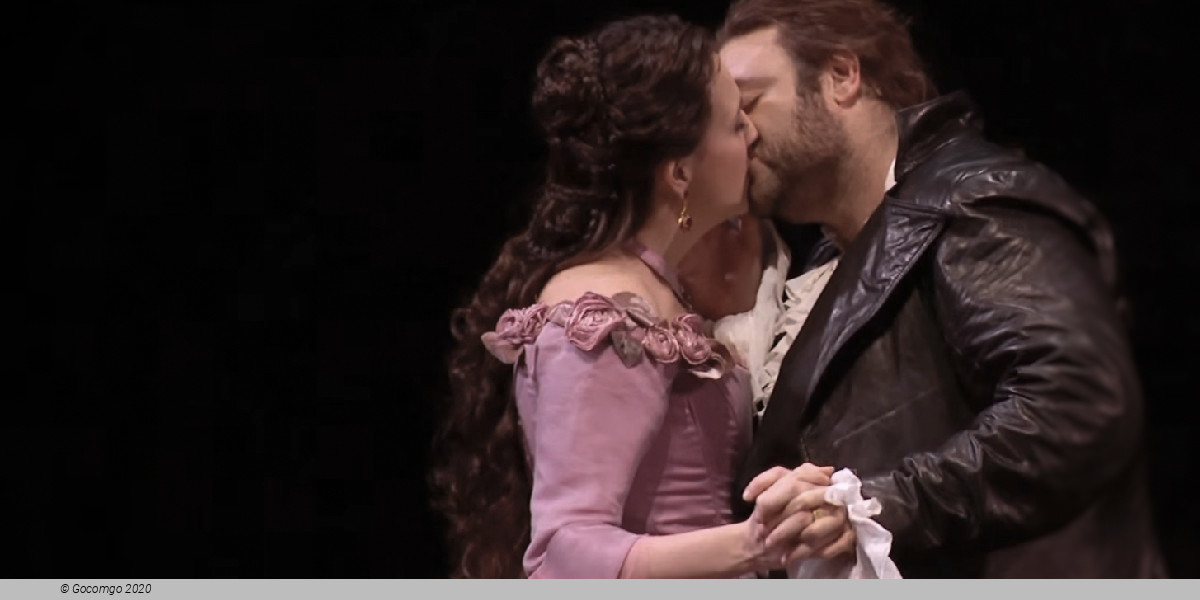
Stanislavsky Music Theatre: Roméo et Juliette Tickets | Event Dates & Schedule | GoComGo.com

Roméo et Juliette Tickets

Stanislavsky Music Theatre, Moscow, Russia
All photos (7)
1 / 7
Available Dates: 27 - 29 Nov, 2026 (3 events)
Important Info
Type: Opera
City: Moscow, Russia
Duration: 3h 5min with 1 interval
Acts: 2
Intervals: 1
Sung in: French

E-tickets: Print at home or at the box office of the event if so specified. You will find more information in your booking confirmation email.

You can only select the category, and not the exact seats.
If you order 2 or 3 tickets: your seats will be next to each other.
If you order 4 or more tickets: your seats will be next to each other, or, if this is not possible, we will provide a combination of groups of seats (at least in pairs, for example 2+2 or 2+3).

Cast
Performers
Choose the date to see the peformers
Creators
Composer: Charles Gounod
Librettist: Jules Barbier
Librettist: Michel Carré
Opera Company: Stanislavsky Theatre Opera
Overview

The Stanislavsky and Nemirovich-Danchenko Music Theatre presents Charles Gounod’s Romeo et Giuliette for the first time. The premiere continues the theatre’s rich tradition of Shakespearean productions while opening a new chapter with a French lyric opera in which the focus is placed above all on the inner world of its protagonists.

Composed in 1867, Gounod’s opera became one of the most celebrated musical interpretations of Shakespeare’s tragedy. Composer and librettists Jules Barbier and Michel Carré bring to the foreground a love that blossoms with extraordinary speed and struggles against an inherited feud. The musical heart of the score lies in four extended duets between Romeo and Juliet, tracing their relationship from tentative first recognition to their final farewell. Luminous cantilena, transparent orchestral colours and an almost dance-like fluidity gradually give way to anxiety and tragic tension.

rDirector Alexey Smirnov maintains the historical distance of the original story while placing the protagonists within a contemporary Verona, a city where the literary myth has long become part of everyday life. The production explores how a great love story passes through the centuries, becoming part of cultural memory and a familiar cultural reference. In the set design, abstract outlines of the old city are combined with enlarged images of modern-day tourist Verona, while the costumes freely reinterpret Renaissance silhouettes. Against this clash of eras, the essential truth of the story emerges: the fragile yet passionate love of two young people for whom love becomes the only reality that truly matters.

History
Premiere of this production: 27 April 1867, Théâtre Lyrique (Théâtre-Lyrique Impérial du Châtelet), Paris

Roméo et Juliette (Romeo and Juliet) is an opera in five acts by Charles Gounod to a French libretto by Jules Barbier and Michel Carré, based on Romeo and Juliet by William Shakespeare. It was first performed at the Théâtre Lyrique (Théâtre-Lyrique Impérial du Châtelet), Paris on 27 April 1867. This opera is notable for the series of four duets for the main characters and the waltz song "Je veux vivre" for the soprano.

Synopsis

The libretto follows the story of Shakespeare's play.

Act 1

Overture prologue:

A short chorus sets the scene of the rival families in Verona.

A masked ball in the Capulets’ palace

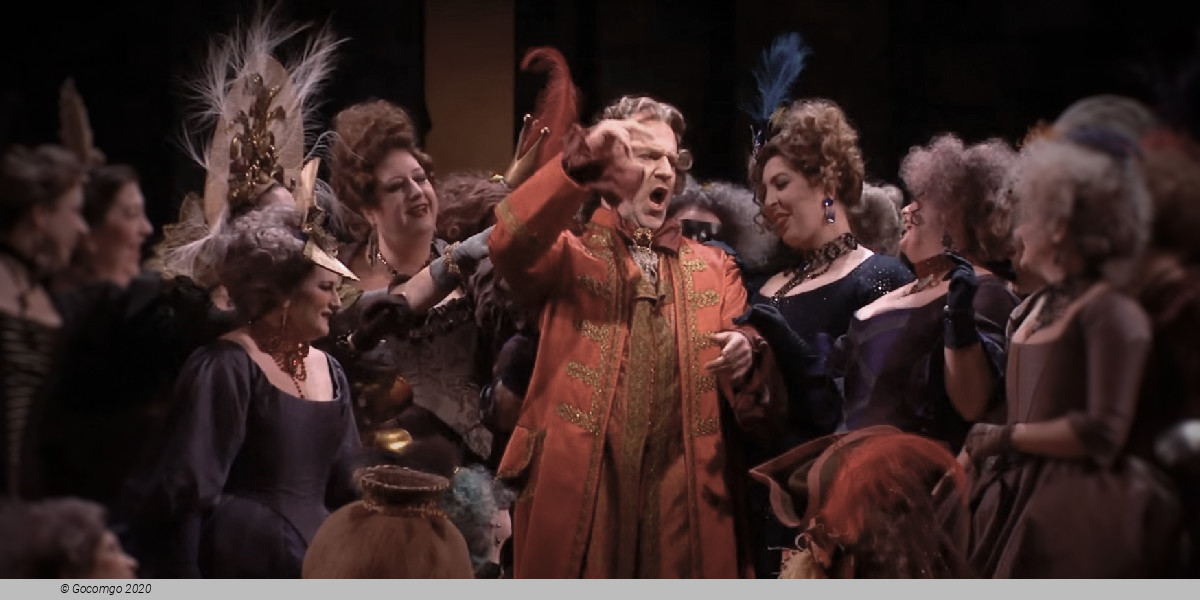
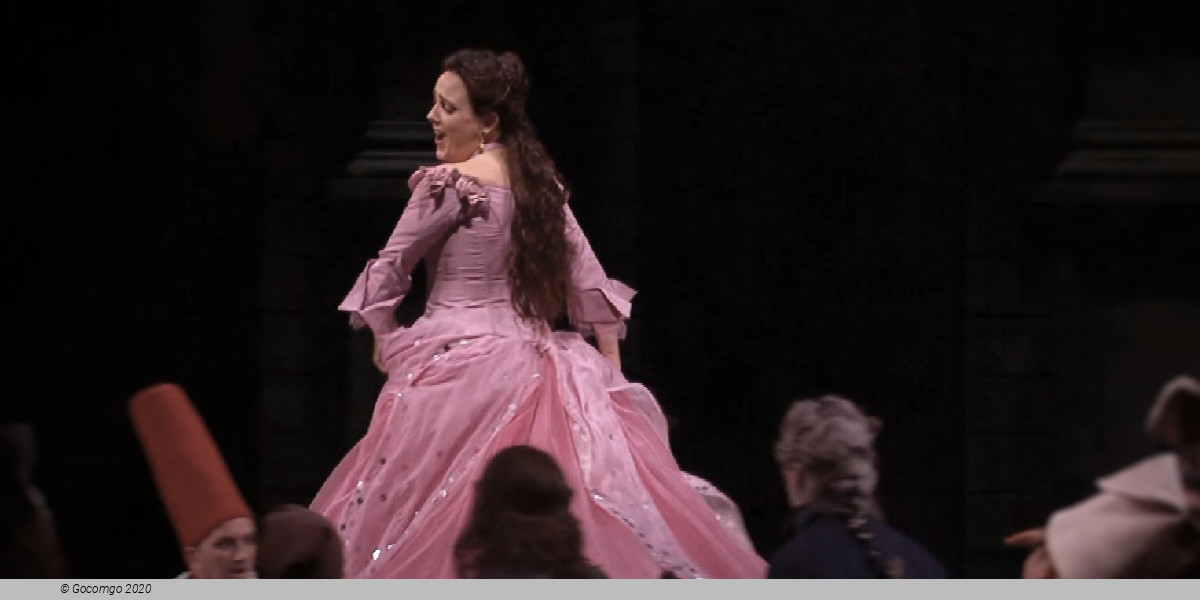
Tybalt talks to Pâris about Juliette, who appears with her father. Roméo, Mercutio, Benvolio and their friends enter, disguised, and Mercutio sings a ballad about Queen Mab, after which Juliette sings a joyful waltz song. The first meeting between Roméo and Juliette takes place, and they fall in love. But Tybalt re-appears and suspects that the hastily re-masked Roméo is his rival. While Tybalt wants immediate revenge, Capulet orders that the ball continue.

Act 2

The Capulets' garden

After Roméo's page Stephano has helped his master gain access, he reveals the two young lovers exchanging their vows of love.

Act 3

Press illustration of Act 3, scene 2, as staged in the original production
Scene 1: Laurent's cell

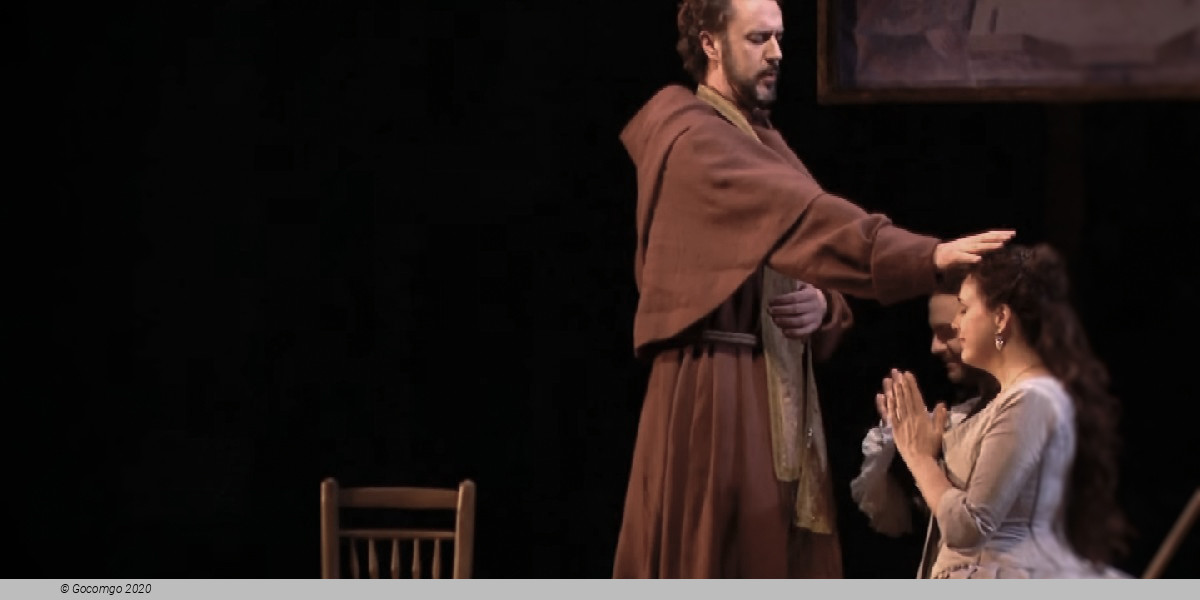
Roméo and Juliette, accompanied by Gertrude, go to the cell, and the wedding takes place. Laurent hopes that reconciliation between the houses of the Montagus and the Capulets may thus take place.

Scene 2: a street near Capulet's palace

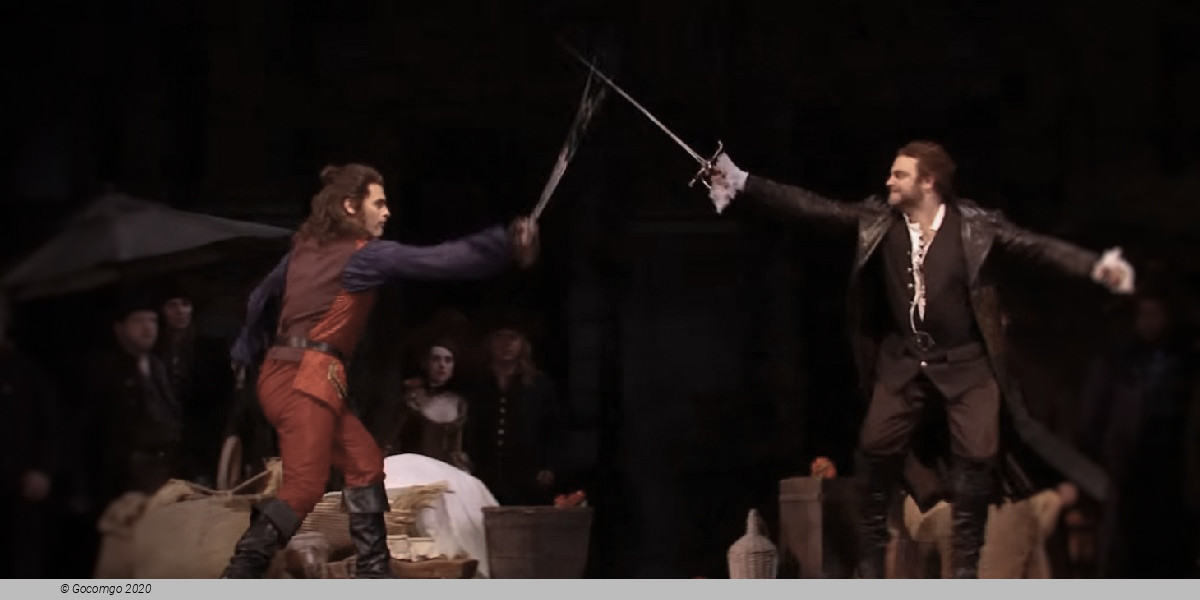
Stephano sings to attract the occupants into the street. Gregoire and Stephano skirmish as men from each family appear. The duel is first between Tybalt and Mercutio, who falls dead, and then between Roméo, determined to avenge his comrade, and Tybalt. Tybalt is killed by Roméo, who is banished by the Duke.

Act 4

Juliet's room at dawn

Roméo and Juliette are together and, after a long duet, Roméo departs for exile. Juliette's father comes to remind her of Tybalt's dying wish for Juliette to marry Count Pâris. The friar gives Juliette a draught which will cause her to sleep, so as to appear as if dead and, after being laid in the family tomb, it is planned that Roméo will awaken her and take her away. 

Act 5

Juliet's tomb

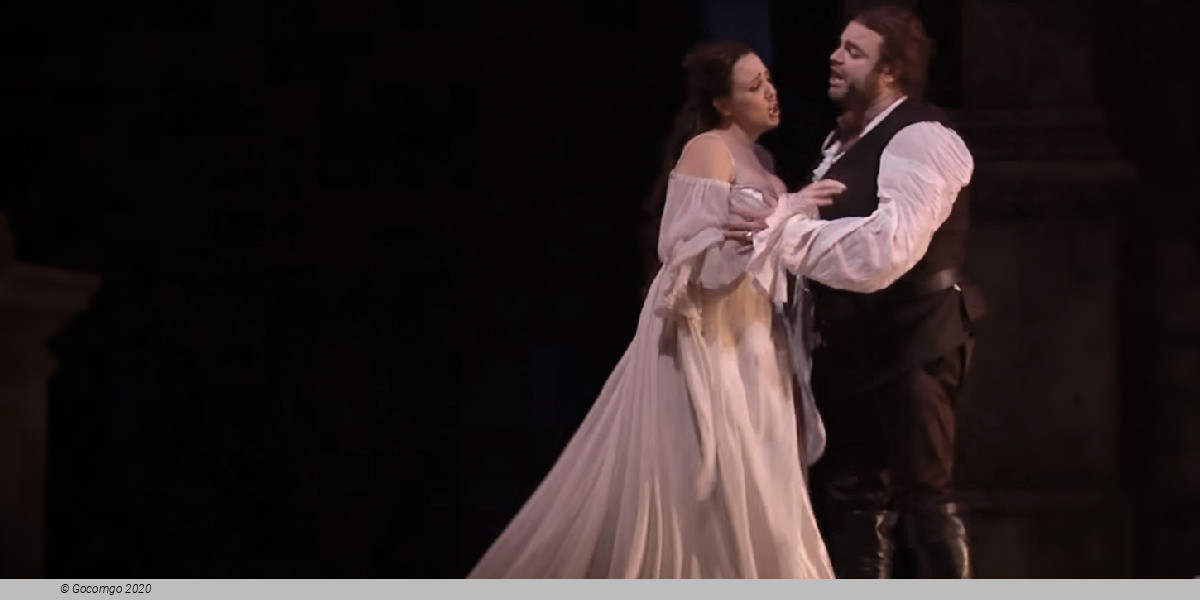
Roméo breaks into the tomb after having taken poison because he believes that Juliette is dead. When she awakes from the friar’s potion, the lovers' last duet is heard before the poison takes effect on Roméo. As her bridegroom weakens Juliette stabs herself, to be united with her lover in death.

Venue Info

Stanislavsky Music Theatre - Moscow
Location   B. Dmitrovka, 17

The Stanislavski and Nemirovich-Danchenko Moscow Academic Music Theatre is a music theatre in Moscow.

The Stanislavsky and Nemirovich-Danchenko Moscow Academic Music Theatre was founded in 1941 when two companies directed by the legendary reformers of twentieth-century theatre — Konstantin Stanislavski and Vladimir Nemirovich-Danchenko — merged: the Stanislavsky Opera Theatre (established at the end of 1918 as an Opera Studio of the Bolshoi Theatre) and the Nemirovich-Danchenko Music Theatre (set up in 1919 as a Studio of the Moscow Art Theatre).

The new theatre followed the artistic principles of its founders, who applied the system of the Moscow Art Theatre to opera and ballet. Both Stanislavsky and Nemirovich-Danchenko rejected the current conception of opera as «costume concert». They wanted to bring it closer to drama and comedy, revealing the main idea of the plot through psychologically motivated action. The ballet company entered the Theatre as a part of Nemirovich-Danchenko's troupe. It was the former company of the Moscow Art Ballet, established in 1929 by Victorina Krieger, the valued ballerina of the Bolshoi Theatre. She was Artistic Director and one of the principal dancers of the Moscow Art Ballet. Soon after Stanislavsky's death, Nemirovich-Danchenko took charge of all the companies (Vsevolod Meyerhold invited by Stanislavsky to work for his theatre, was arrested in 1939, and no other stage director could prove equal to Nemirovich-Danchenko). Then the theatre was given its present name.

Important Info
Type: Opera
City: Moscow, Russia
Duration: 3h 5min with 1 interval
Acts: 2
Intervals: 1
Sung in: French

E-tickets: Print at home or at the box office of the event if so specified. You will find more information in your booking confirmation email.

You can only select the category, and not the exact seats.
If you order 2 or 3 tickets: your seats will be next to each other.
If you order 4 or more tickets: your seats will be next to each other, or, if this is not possible, we will provide a combination of groups of seats (at least in pairs, for example 2+2 or 2+3).

From
$ 0
Top of page