
Teatro Dell'Opera Di Roma tickets 19 January 2027 - Andrea Chénier | GoComGo.com

Andrea Chénier

Teatro Dell'Opera Di Roma, Teatro Costanzi, Rome, Italy
All photos (10)
Select date and time
8 PM
From
US$ 94

E-tickets: Print at home or at the box office of the event if so specified. You will find more information in your booking confirmation email.

You can only select the category, and not the exact seats.
If you order 2 or 3 tickets: your seats will be next to each other.
If you order 4 or more tickets: your seats will be next to each other, or, if this is not possible, we will provide a combination of groups of seats (at least in pairs, for example 2+2 or 2+3).

Important Info
Type: Opera
City: Rome, Italy
Starts at: 20:00
Sung in: Italian
Titles in: English,Italian

E-tickets: Print at home or at the box office of the event if so specified. You will find more information in your booking confirmation email.

You can only select the category, and not the exact seats.
If you order 2 or 3 tickets: your seats will be next to each other.
If you order 4 or more tickets: your seats will be next to each other, or, if this is not possible, we will provide a combination of groups of seats (at least in pairs, for example 2+2 or 2+3).

Cast
Performers
Tenor: Brian Jagde (Andrea Chénier)
Conductor: Daniel Oren
Mezzo-Soprano: Annunziata Vestri (Maddalena di Coigny)
Soprano: Cassandre Berthon (Bersi)
Choir: Teatro dell`Opera di Roma Chorus
Creators
Composer: Umberto Giordano
Librettist: Luigi Illica
Director: Marco Bellocchio
Opera Company: Teatro dell’Opera di Roma
Overview

Produced by the Rome Opera House in co-production with the Teatro La Fenice in Venice

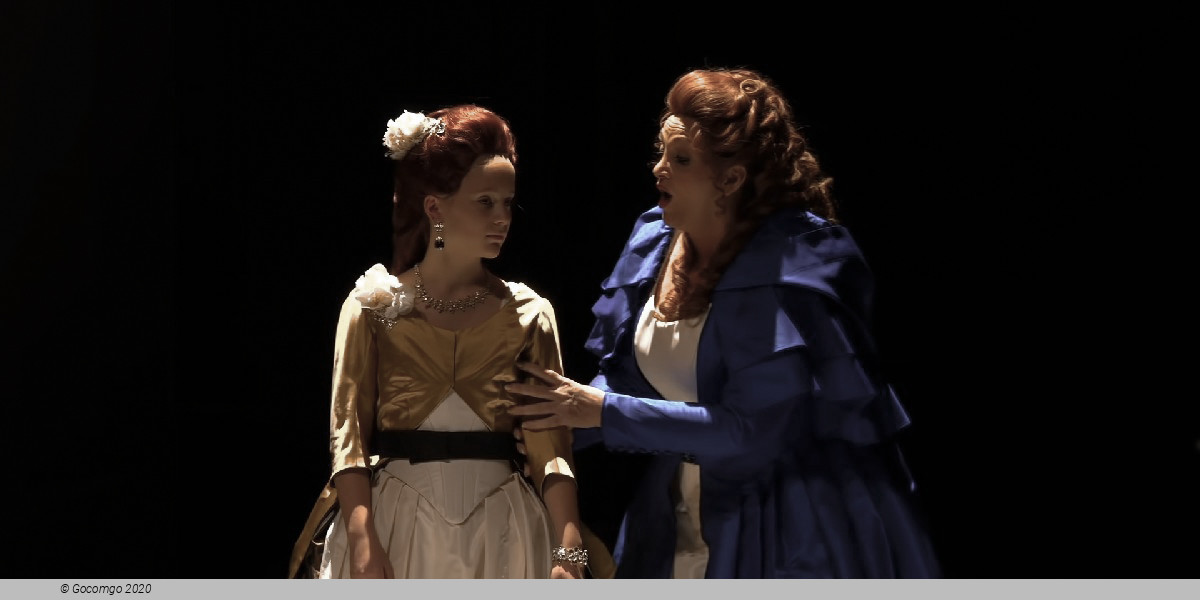
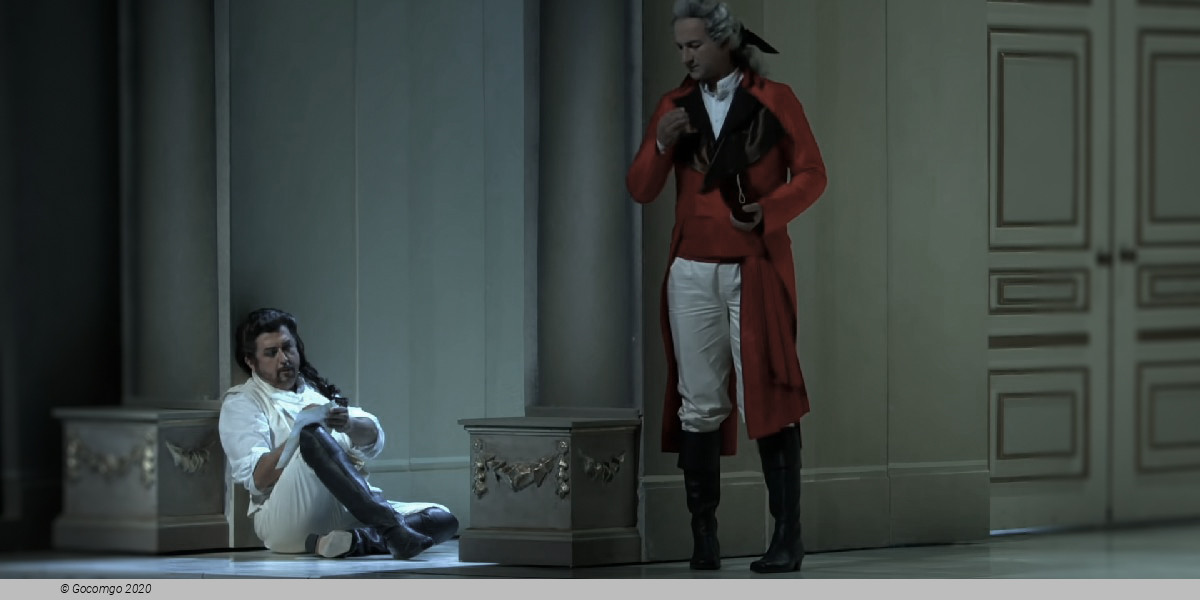
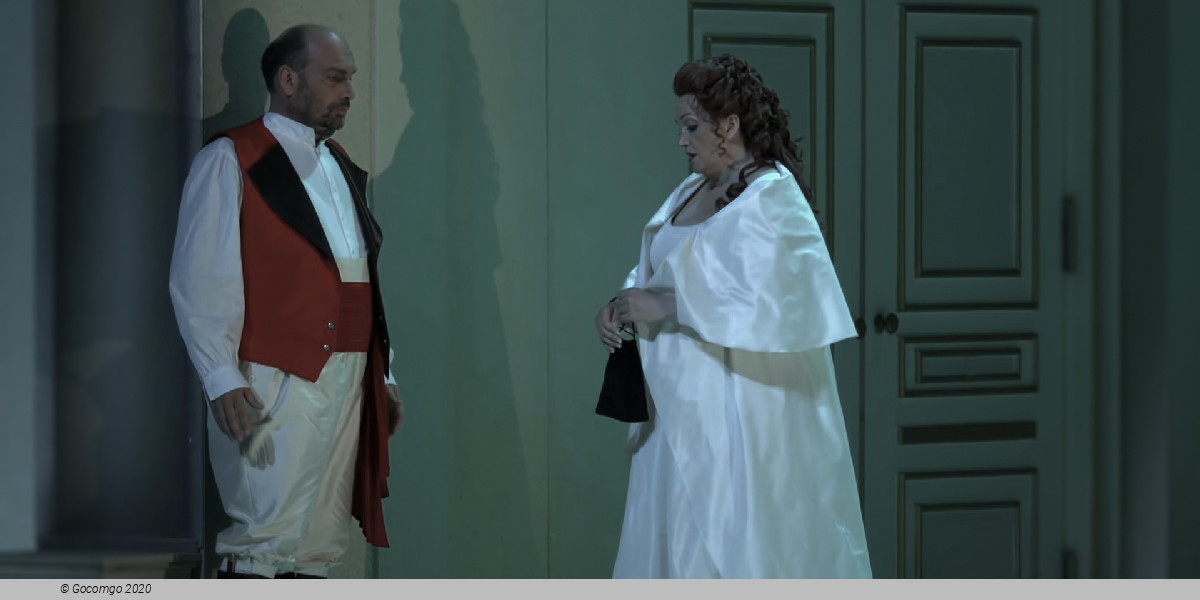
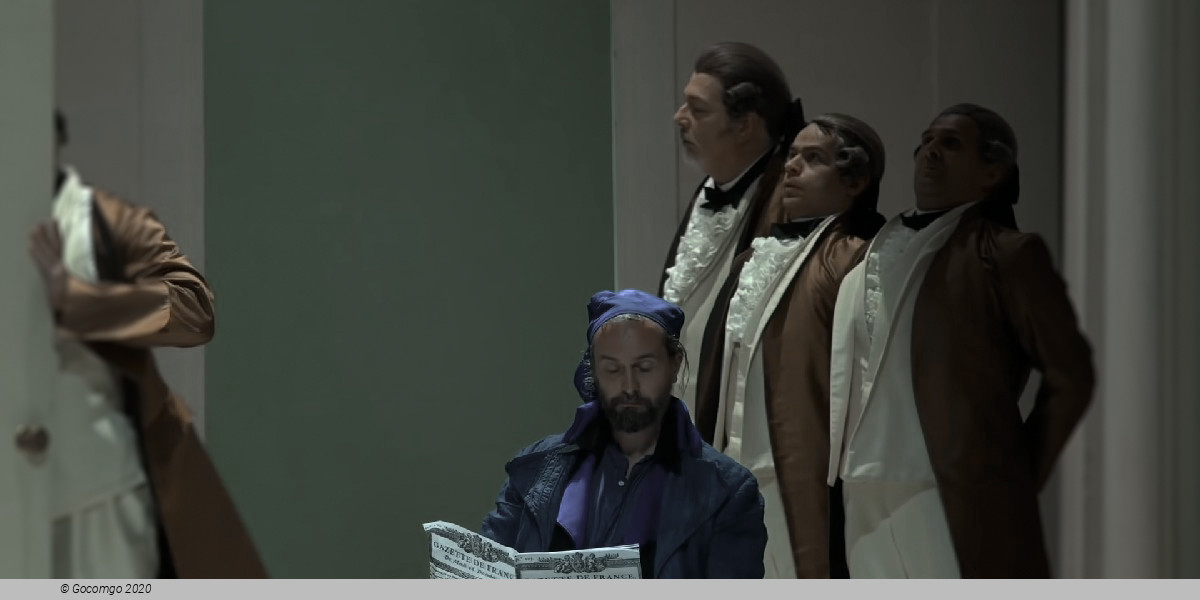
Andrea Chénier is Umberto Giordano’s dramatic opera set during the French Revolution. The story follows the poet Andrea Chénier, his love for Maddalena di Coigny and the revolutionary Gérard, whose political convictions and personal passions become intertwined during one of the most turbulent periods in French history.

Andrea Chénier is a powerful historical opera by Umberto Giordano, set against the dramatic backdrop of the French Revolution. The story follows the poet Andrea Chénier, whose idealism and passionate love for Maddalena di Coigny place him at the centre of a world transformed by political upheaval.

Maddalena, the daughter of an aristocratic family, is forced to confront the collapse of her privileged world, while Gérard, once a servant in her household, rises through the revolutionary movement. Their personal relationships become increasingly complicated as political violence and suspicion spread throughout France.

Combining passionate melodies, powerful orchestral writing and dramatic historical events, Andrea Chénier explores love, political ideals, sacrifice and the conflict between personal freedom and revolutionary power.

History
Premiere of this production: 28 March 1896, La Scala, Milan

Andrea Chénier is a verismo opera in four acts by Umberto Giordano, set to an Italian libretto by Luigi Illica, and first performed on 28 March 1896 at La Scala, Milan. The story is based loosely on the life of the French poet André Chénier (1762–1794), who was executed during the French Revolution. The character Carlo Gérard is partly based on Jean-Lambert Tallien, a leading figure in the Revolution. It remains popular with audiences, though less frequently performed than in the first half of the 20th century. One reason for its survival in the repertoire is the lyrical-dramatic music provided by Giordano for the tenor lead, which gives a talented singer opportunities to demonstrate his histrionic skill and flaunt his voice. Giuseppe Borgatti's triumph in the title role at the first performance immediately propelled him to the front rank of Italian opera singers. He went on to become Italy's greatest Wagnerian tenor, rather than a verismo-opera specialist.

Synopsis

Time: 1789–94.
Place: In and around Paris.

Act 1
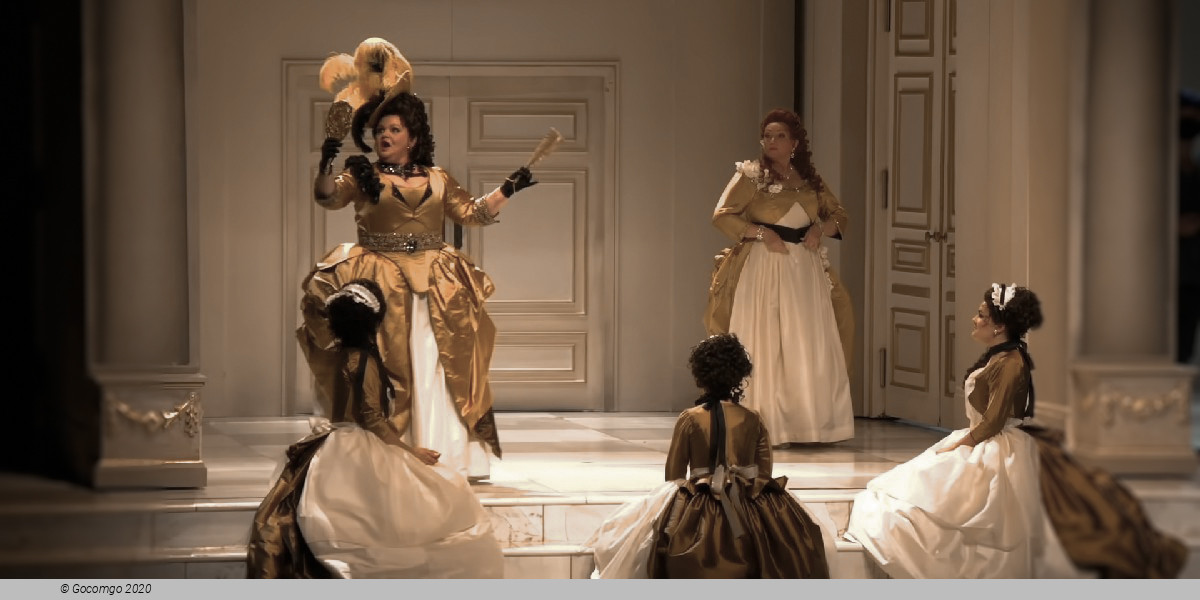
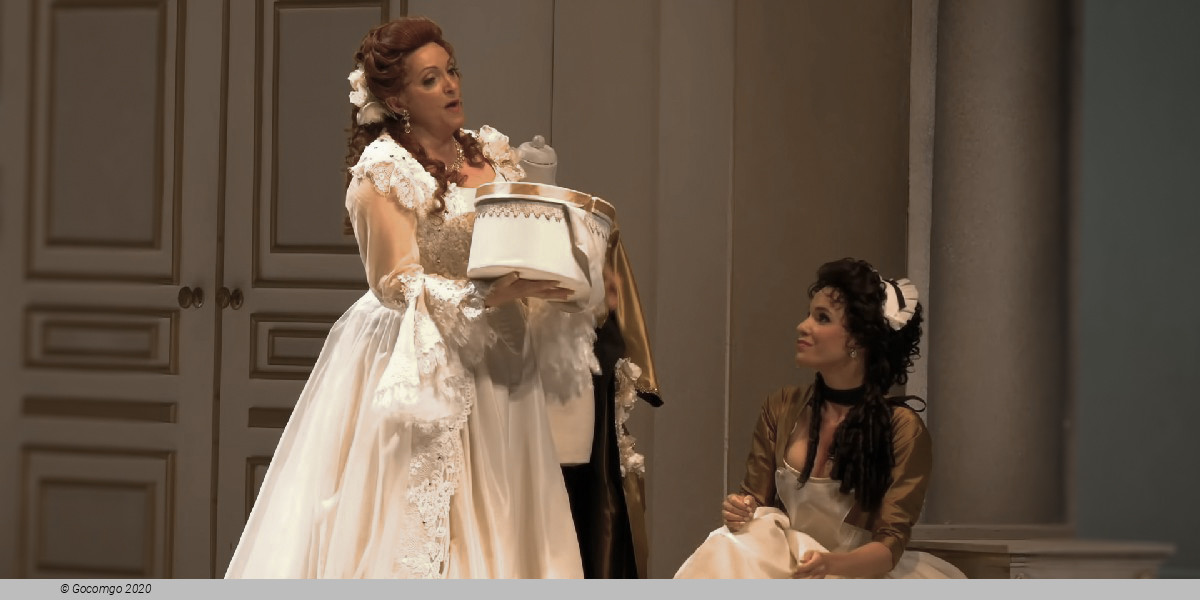
Palace of the Countess of Coigny Servants are preparing the Palace for a ball. Carlo Gérard, the majordomo, is filled with indignation at the sight of his aged father, worn out by long years of heavy labour for their noble masters. Only the Countess' daughter Maddalena escapes his hatred, since he is besotted with her. Maddalena jokes with Bersi, her mulatto servant girl. The Countess rebukes Maddalena for dallying around when she should be dressing for the ball.

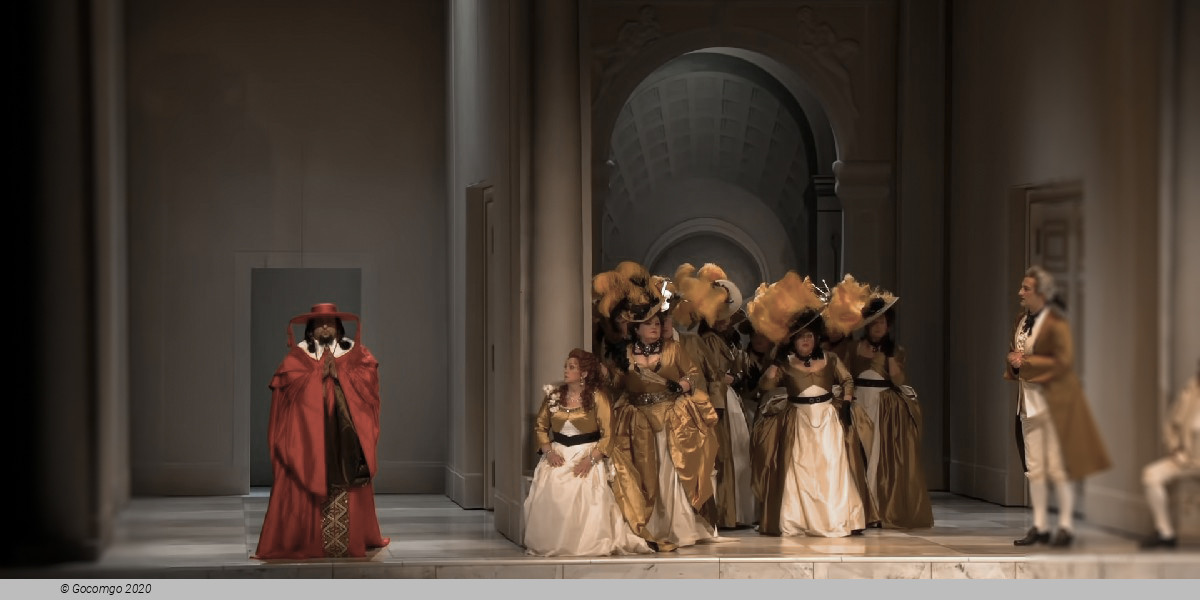
The guests arrive. Among them is an Abbé who has come from Paris with news about the poor decisions of King Louis XVI's government. Also among the guests is the dashing and popular poet, Andrea Chénier.

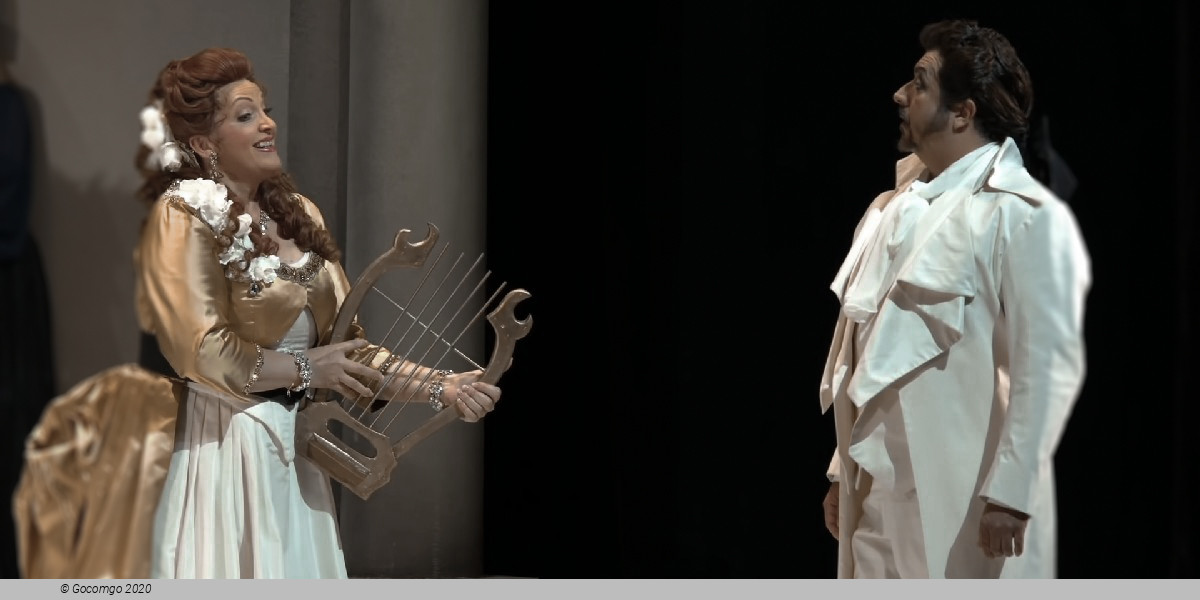
The soirée begins with a "pastoral" performance. A chorus of shepherds and shepherdesses sing idealised rustic music and a ballet mimics a rural love story in stately court fashion. The Countess asks Chénier to improvise a poem but he says that inspiration has abandoned him. Maddelena asks Chénier to recite a verse, but he refuses her also, saying that "Fantasy is not commanded on cue." The laughter of the girls draws the Countess' attention, and Maddelena explains mockingly that the Muse of poetry is absent from the party. Chénier now becomes angry and improvises a poem about the suffering of the poor, ending with a tirade against those in power in church and state, shocking the guests. Maddalena begs forgiveness.

The guests dance a gavotte, which is interrupted by a crowd of ragged people who ask for food, Gérard ushers them in announcing that "Her Greatness, Misery" has arrived to the party. The Countess confronts Gérard who repudiates his service and throws his livery at the feet of the Countess, taking his father with him, who threw himself at the feet of the Countess. She orders them all out, and comforts herself by thoughts of her gifts to charity. The ball continues as if nothing had happened.

Act 2
Café Hottot in Paris, during the Reign of Terror

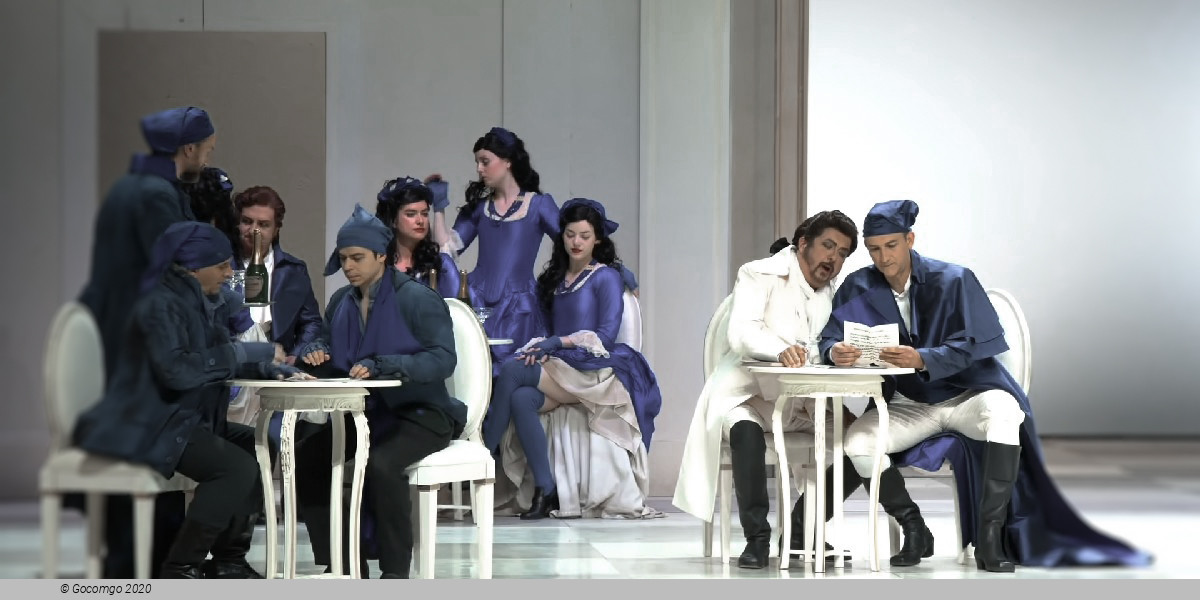
Bersi, now a merveilleuse, chats with an incroyable. She asks him if he is a spy for Robespierre, but he says that he is a mere "observer of the public spirit". Bersi asserts she has nothing to hide as "a child of the Revolution".

A tumbrel passes, bearing condemned prisoners to the guillotine, mocked by the crowd. Bersi leaves. The Incroyable notes that she was with a blonde woman he is looking for; he also notes that Chénier is at a nearby table waiting nervously and that Bersi had made signs at him.

Chénier's friend Roucher enters. He reminds Chénier that he is under suspicion for his association with disgraced General Dumoriez and urges him to flee. He offers Chénier a false passport. Chénier refuses: his destiny is love; he has been waiting for a mysterious woman who has sent him letters. Roucher sees the last letter, and dismisses it as from a prostitute and he warns Chénier that love is dangerous during the Révolution. He persuades Chénier to take the passport.

A procession of revolutionary leaders passes, including Robespierre and Gérard, who enters the café. The Incroyable reports to him about Bersi and the possible connection with the blonde, whom Gérard has been seeking, saying that she will come to the café that night. Bersi returns, and pleads with Roucher to keep Chénier there. She leaves for a dance with the Incroyable. Roucher persuades Chénier to leave, but the old woman Madelon tells Chénier to wait for a woman called "Speranza" (Hope); all leave, except the Incroyable, who returns and hides.

A hooded woman enters. It is "Speranza". She uncovers herself, and Chénier recognizes her as Maddalena de Coigny. The Incroyable leaves to tell Gérard. Despite the danger, Chénier and Maddalena proclaim their love in a passionate duet.

As they prepare to leave they are discovered by Gérard. Chénier sends Maddalena away with Roucher and wounds Gérard in a sword fight. Believing he is dying, Gérard warns Chénier to flee from the wrath of the prosecutor Fouquier-Tinville, Chénier's enemy, and asks him to protect Maddalena. The Incroyable returns with soldiers and a crowd, but Gérard tells them that his assailant is unknown to him. All blame the Girondists.

Act 3
The Revolutionary Tribunal

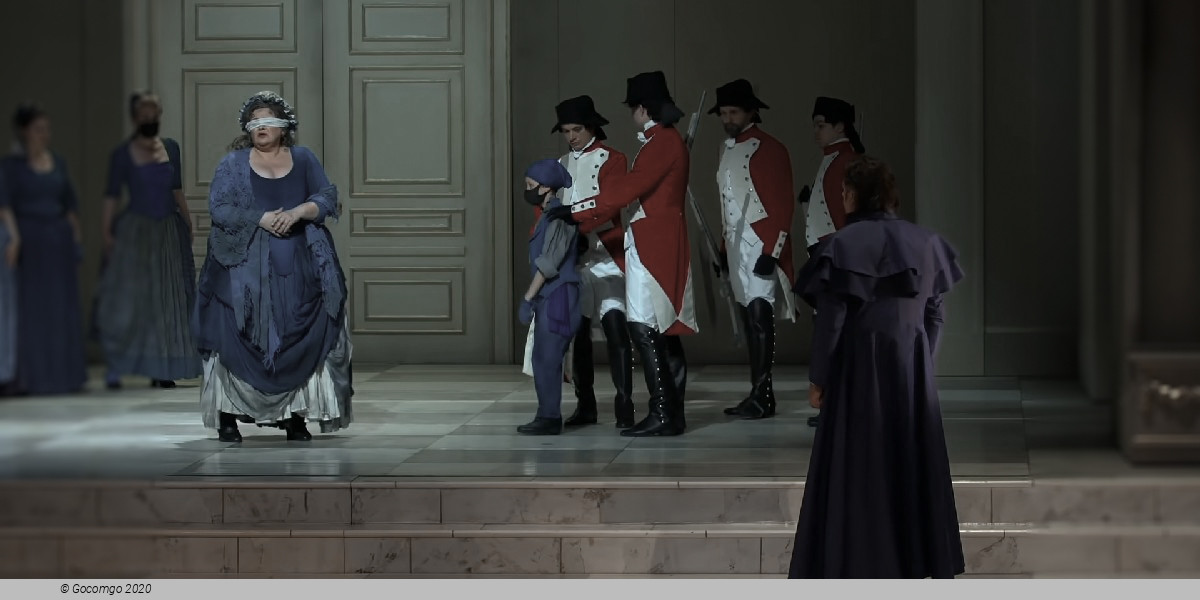
The sans-culotte Mathieu calls on the people to give money for the army of the Revolution, but they refuse. Gérard, who has recovered, enters and renews the appeal and the people react with enthusiasm. A blind woman comes in with her grandson, whom she gives to be a soldier of the Revolution. The crowd disperses.

The Incroyable reports to Gérard that Chénier has been arrested in the Parisian suburb of Passy and interned in the Luxembourg Palace, and it is only a matter of time before Maddalena will come for him. He urges Gérard to write down the charges against Chénier for his trial. Gérard hesitates but the Incroyable convinces him that a conviction by the Tribunal will only secure Maddalena's appearance. Alone, he muses that his Revolutionary ideals are being betrayed by his false charges, therefore he is still a slave: formerly of the nobles, now of his own lust. Finally desire triumphs and he signs the indictment in a mood of cynicism. (Gérard: "Nemico della patria?!") The Incroyable takes it to the Tribunal.

Maddalena enters to plead for Chénier's life. Gérard admits that he had Chénier arrested to control Maddalena. He has been in love with her since they were children and he remembers the time when they were allowed to play together in the fields of her house, how when he was handed his first livery, he watched in secret Maddalena learning to dance at the time when he was in charge of opening doors, but now he is a powerful man and will have his way. Maddalena refuses: she will shout out her name in the streets and be executed as an aristocrat, but if her virtue is the price for Chénier's life, then Gérard can have her body.

Gérard is about to take her but recoils when he realizes the love that she professes for Chénier. Maddalena sings how the mob murdered her mother and burned her palace, how she escaped, and how Bersi became a prostitute to support them both. She laments how she brings disgrace to all that she loves and finally how Chénier was the force that gave life back to her.

Gérard searches for the indictment to cancel it, but it has already gone. He pledges to save Chénier's life even at the cost of his own. A clerk presents the list of accused persons, including Chénier. A crowd of spectators enter, then the judges, presided over by Fouquier-Tinville, then the prisoners. One by one, the prisoners are hastily condemned. When Chénier is tried, he denies all the charges, and proclaims his honour.

Chénier's plea has moved everyone and Fouquier-Tinville is forced to take up witnesses. Gérard approaches the Tribunal and confesses to the falsity of his indictment but Fouquier-Tinville takes up the charges himself. Gérard defies the Tribunal: justice has become Tyranny, and "we murder our poets."

Chénier embraces Gérard, who points out Maddalena in the crowd. The Tribunal condemns Chénier to death and he is led off with the other prisoners.

Act 4
St. Lazare Prison

Chénier awaits his execution with Roucher, writing verses of his faith in truth and beauty. Roucher leaves, as Mathieu sings the Marseillaise outside.

Maddalena enters with Gérard for a last meeting with Chénier. Maddalena bribes the jailer Schmidt to let her change places with a condemned noblewoman. Gérard leaves to make a last appeal to Robespierre.

The lovers sing about their love and their deliverance from this world after death. As dawn approaches, Schmidt calls their names. They go to face the guillotine joined in love.

Venue Info

Teatro Dell'Opera Di Roma - Rome
Location   Piazza Beniamino Gigli

The Teatro dell'Opera di Roma is a major opera house in Rome. Originally opened in November 1880 as the 2,212-seat Costanzi Theatre, it has undergone several changes of name as well modifications and improvements. The present house seats 1,600.  Over one hundred years of success have brought the most acclaimed voices, the most prestigious sticks, and the notes of musicians who have marked its destiny to the Teatro dell'Opera di Roma: Pietro Mascagni, Giacomo Puccini, Ottorino Respighi, have delivered it to the honors of history of Italian melodrama as the cradle of 20th-century opera and musical theater.

Original Teatro Costanzi: 1880 to 1926
The Teatro dell'Opera was originally known as the Teatro Costanzi after the contractor who built it, Domenico Costanzi (1819–1898). It was financed by Costanzi, who commissioned the Milanese architect Achille Sfondrini (1836–1900), a specialist in the building and renovation of theatres. The opera house was built in eighteen months, on the site where the house of Heliogabalus stood in ancient times, and was inaugurated on 27 November 1880 with a performance of Semiramide by Gioachino Rossini.

Designing the theatre, Sfondrini paid particular attention to the acoustics, conceiving the interior structure as a "resonance chamber", as is evident from the horseshoe shape in particular. With a seating capacity of 2,212, the house had three tiers of boxes, an amphitheater, and two separate galleries, surmounted by a dome adorned with splendid frescoes by Annibale Brugnoli.

Costanzi was obliged to manage the theater himself. Under his direction, and despite financial problems, the opera house held many world premieres of operas, including Cavalleria Rusticana by Pietro Mascagni on 17 May 1890. For a brief period, the theatre was managed by Costanzi's son, Enrico, who gained renown by organizing another great premiere, that of Tosca by Giacomo Puccini on 14 January 1900.

In 1907, the Teatro Costanzi was purchased by the impresario Walter Mocchi (1871–1955) on behalf of the Società Teatrale Internazionale e Nazionale (STIN). In 1912 Mocchi's wife, Emma Carelli, became the managing director of the new Impresa Costanzi, as the theatre was later known, following various changes in the company structure. During the fourteen years of her tenure, major works which had not been performed before in Rome (or even in Italy) were staged. These included La fanciulla del West, Turandot and Il trittico by Giacomo Puccini; Parsifal by Richard Wagner; Francesca da Rimini (Zandonai) by Riccardo Zandonai; Boris Godunov by Modest Mussorgsky; Samson et Dalila by Camille Saint-Saëns and many others. Diaghilev's Ballets Russes also performed.

Restructured Teatro Reale dell'Opera: 1926 to 1946
In November 1926 the Costanzi was bought by the Rome City Council and its name changed to Teatro Reale dell'Opera. A partial rebuilding ensued, led by architect Marcello Piacentini and lasting fifteen months. The house re-opened on 27 February 1928 with the opera Nerone by Arrigo Boito.

Chief among several major changes was the relocated entrance, from the street formerly known as Via del Teatro (where the garden of the Hotel Quirinale is now) to the opposite side, where Piazza Beniamino Gigli exists today. In addition, the amphitheater inside the theatre was replaced by the fourth tier of boxes (now the third tier) and a balcony. The interior was embellished by new stuccowork, decorations, and furnishings, including a magnificent chandelier measuring six meters in diameter and composed of 27,000 crystal drops.

Above the proscenium arch is a plaque commemorating the rebuilding: "Vittorio Emanuele III Rege, Benito Mussolini Duce, Lodovicus Spada Potenziani, Romae Gubernator Restituit MCMXXVIII—VI”". Confusingly the dates appear to be back to front. (The VI refers to the sixth year after the Fascist's March on Rome of 1922.)

Present Teatro dell'Opera di Roma: from 1946
Following the end of the monarchy, the name was simplified to Teatro dell'Opera and, in 1958, the building was again remodeled and modernized. Rome City Council again commissioned architect Marcello Piacentini, who radically altered the building's style, notably with regard to the facade, entrance, and foyer, each of these taking the form we know today.

The theater's legendary acoustics still bear comparison with any other auditorium in the world. The seating capacity is about 1,600. The house was retrofitted with air-conditioning subsequent to a restoration, which provided improvements to the interior. The stucco work was completely restored, the great proscenium arch strengthened, and a parquet floor of solid oak blocks laid to replace the previous one.

On 2 January 1958, the theater was the venue for a controversial performance of Norma starring Maria Callas in the presence of the President of Italy: for health reasons, Callas abandoned the performance after the first act (the opera company had not engaged an understudy).

The post-war period saw celebrated productions, including Mozart's Le nozze di Figaro in 1964 and Verdi's Don Carlo in 1965, both conducted by Carlo Maria Giulini and directed by Luchino Visconti.

In the 1950s and 1960s, the Director was Riccardo Vitale (father of actress Milly Vitale).

In 1992, Gian Carlo Menotti was appointed Artistic Director of the Teatro dell'Opera di Roma, a post he maintained for two years before being asked to resign over conflicts with the theatre's managers involving Menotti's insistence on staging Wagner's Lohengrin.

From 2001 to 2010, the music director and chief conductor of the company were Gianluigi Gelmetti. He was due to be succeeded in these posts by Riccardo Muti, as announced in August 2009, but Muti demurred, citing in La Repubblica in October 2010 "general difficulties that are plaguing the Italian opera houses". Later, Muti assumed a role similar to that of a music director but without a title. Notable productions under Muti have included Gluck's Iphigénie en Aulide (2009), Verdi's Nabucco (2011), Simon Boccanegra (2012), and Ernani (2013).

Daniele Gatti was first guest-conducted with the company during the 2016–2017 season. He returned for subsequent guest engagements in each of the following two seasons. In December 2018, the company announced the appointment of Gatti as its new music director, with immediate effect. Gatti is scheduled to stand down as the company's music director on 31 December 2021. In June 2021, the company announced the appointment of Michele Mariotti as its next music director, effective 1 November 2022, with an initial contract of 4 years.

Important Info
Type: Opera
City: Rome, Italy
Starts at: 20:00
Sung in: Italian
Titles in: English,Italian
Top of page