

Teatro Dell'Opera Di Roma tickets 22 June 2027 - Premiere Il trovatore | GoComGo.com

Premiere
Il trovatore

Teatro Dell'Opera Di Roma, Teatro Costanzi, Rome, Italy
All photos (5)
Select date and time
8 PM
From
US$ 125

E-tickets: Print at home or at the box office of the event if so specified. You will find more information in your booking confirmation email.

You can only select the category, and not the exact seats.
If you order 2 or 3 tickets: your seats will be next to each other.
If you order 4 or more tickets: your seats will be next to each other, or, if this is not possible, we will provide a combination of groups of seats (at least in pairs, for example 2+2 or 2+3).

Important Info
Type: Opera
City: Rome, Italy
Starts at: 20:00
Acts: 4
Sung in: Italian
Titles in: English,Italian

E-tickets: Print at home or at the box office of the event if so specified. You will find more information in your booking confirmation email.

You can only select the category, and not the exact seats.
If you order 2 or 3 tickets: your seats will be next to each other.
If you order 4 or more tickets: your seats will be next to each other, or, if this is not possible, we will provide a combination of groups of seats (at least in pairs, for example 2+2 or 2+3).

Cast
Performers
Soprano: Marina Rebeka (Leonora)
Mezzo-Soprano: Ekaterina Semenchuk (Azucena)
Conductor: Nicola Luisotti
Tenor: Angelo Villari (Manrico)
Choir: Coro del Teatro della Fortuna
Baritone: George Petean (Count di Luna)
Bass: Riccardo Fassi (Ferrando)
Creators
Composer: Giuseppe Verdi
Dramaturge: Antonio García Gutiérrez
Director: Daniele Menghini
Librettist: Leone Emmanuele Bardare
Librettist: Salvadore Cammarano
Opera Company: Teatro dell’Opera di Roma
Overview

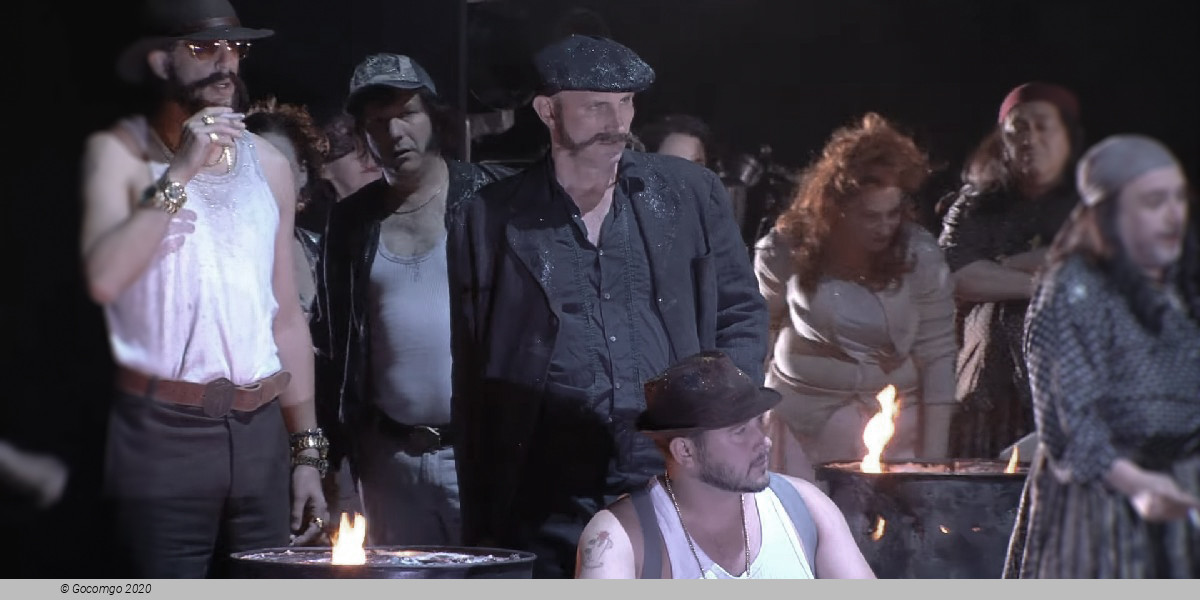
Giuseppe Verdi’s Il trovatore is a powerful opera of love, revenge and fate set against a backdrop of war and political conflict. The story follows the troubadour Manrico, the noblewoman Leonora, the Count of Luna and the mysterious Azucena, whose intertwined destinies lead to a devastating revelation.

Giuseppe Verdi’s Il trovatore is one of the great masterpieces of the Italian operatic repertoire. Set against a backdrop of civil war and political conflict, the opera tells a dramatic story of forbidden love, jealousy, revenge and family secrets.

Leonora loves the mysterious troubadour Manrico, but the Count of Luna is also in love with her and becomes his rival. At the heart of the story is Azucena, a Romani woman whose tragic past is connected to Manrico through a terrible act of revenge. As the characters become caught between love and political conflict, long-hidden secrets ultimately lead to a devastating conclusion.

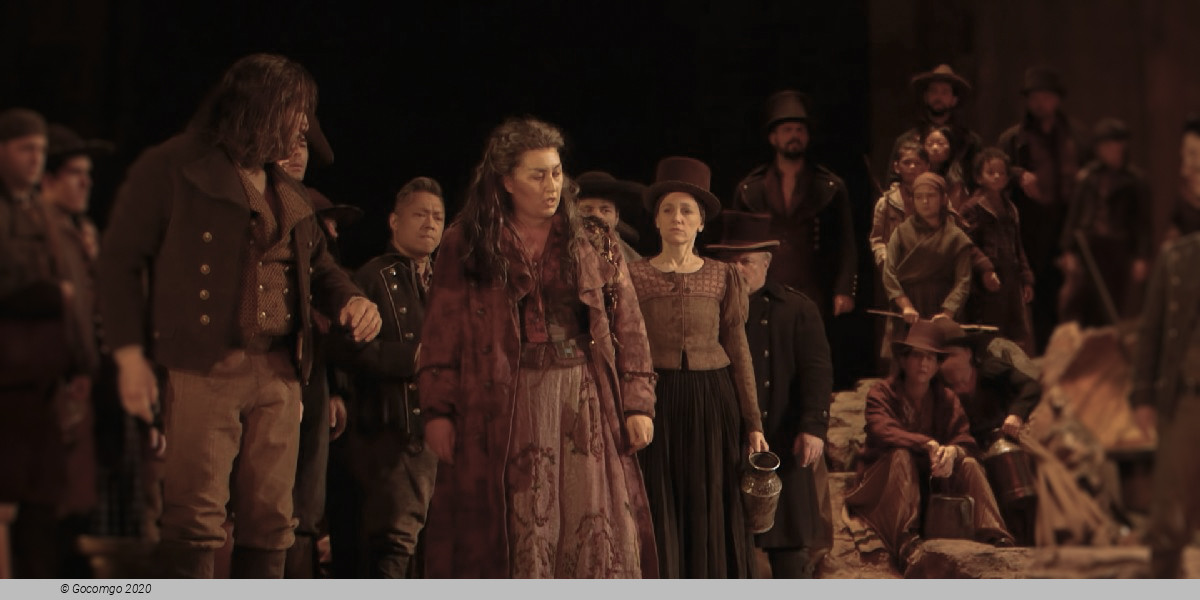
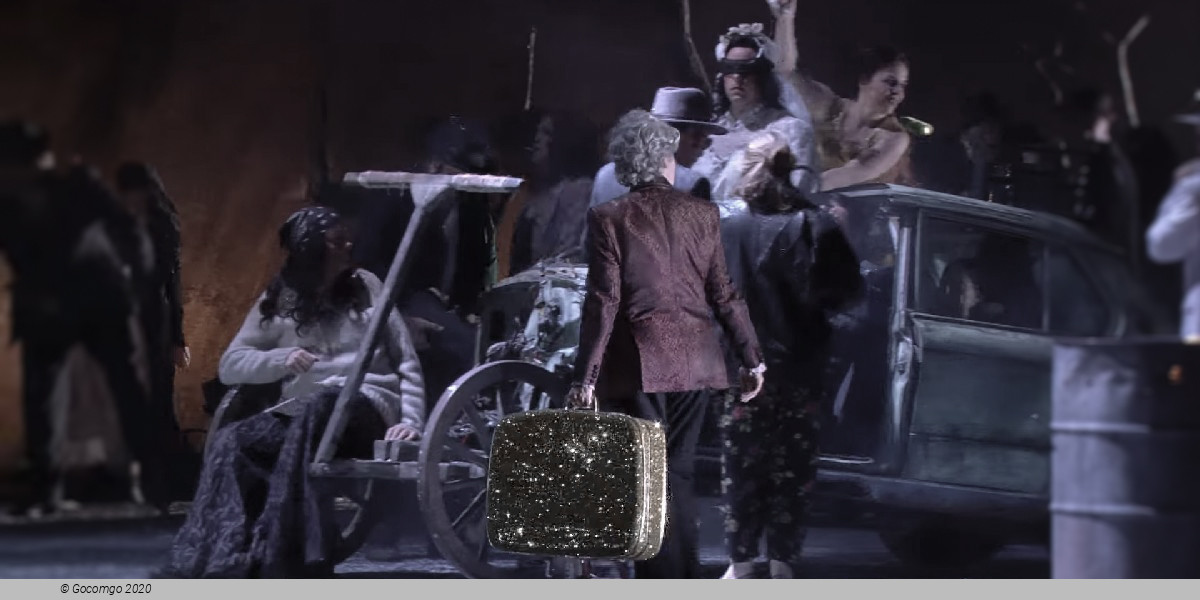
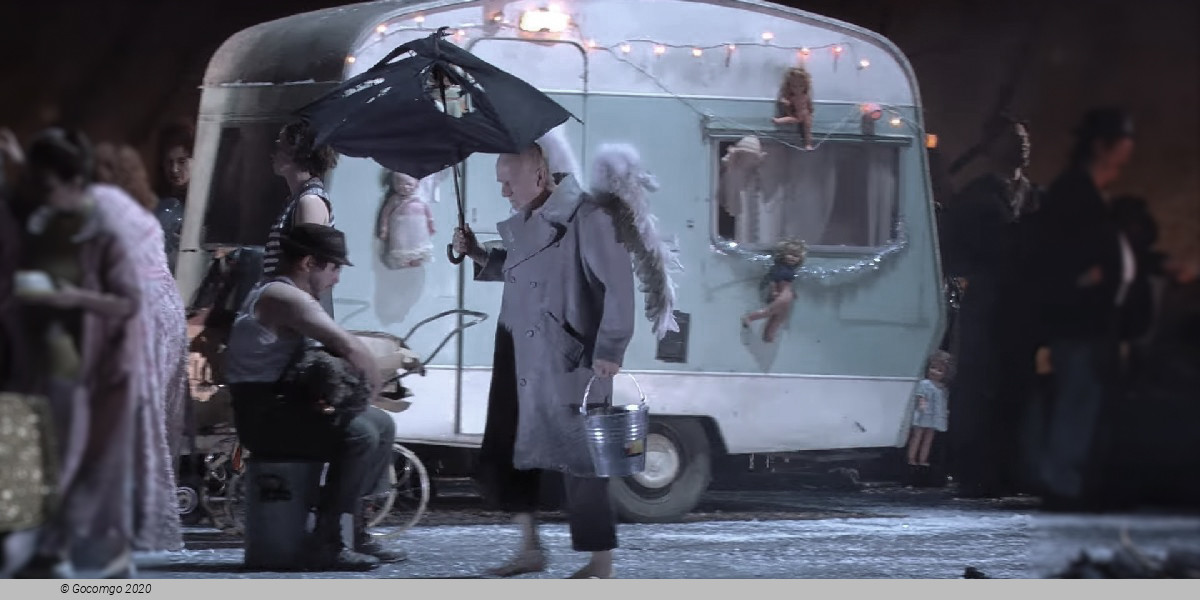
This new production is directed by Daniele Menghini, making his debut at Teatro Costanzi, with Nicola Luisotti conducting the Orchestra and Chorus of the Teatro dell’Opera di Roma. The cast features Marina Rebeka and Vasilisa Beržanskaya as Leonora, Angelo Villari and Vittorio Grigolo as Manrico, Ekaterina Semenchuk and Valentina Pernozzoli as Azucena, and George Petean as the Count of Luna.

History
Premiere of this production: 19 January 1853, Teatro Apollo, Rome

Il trovatore is an opera in four acts by Giuseppe Verdi to an Italian libretto largely written by Salvadore Cammarano, based on the play El trovador (1836) by Antonio García Gutiérrez. It was Gutiérrez's most successful play, one which Verdi scholar Julian Budden describes as "a high flown, sprawling melodrama flamboyantly defiant of the Aristotelian unities, packed with all manner of fantastic and bizarre incident."

Synopsis

Place: Biscay and Aragon (Spain)
Time: Fifteenth century.

Act 1: The Duel
Scene 1: The guard room in the castle of Luna (The Palace of Aljafería, Zaragoza, Spain)

Ferrando, the captain of the guards, orders his men to keep watch while Count di Luna wanders restlessly beneath the windows of Leonora, lady-in-waiting to the Princess. Di Luna loves Leonora and is jealous of his successful rival, a troubadour whose identity he does not know. In order to keep the guards awake, Ferrando narrates the history of the count (Racconto: Di due figli vivea padre beato / "The good Count di Luna lived happily, the father of two sons"): many years ago, a gypsy was wrongfully accused of having bewitched the youngest of the di Luna children; the child had fallen sick, and for this the gypsy had been burnt alive as a witch, her protests of innocence ignored. Dying, she had commanded her daughter Azucena to avenge her, which she did by abducting the baby. Although the burnt bones of a child were found in the ashes of the pyre, the father refused to believe his son's death. Dying, the father commanded his firstborn, the new Count di Luna, to seek Azucena.

Scene 2: Garden in the palace of the princess

Leonora confesses her love for the Troubadour to her confidante, Ines (Cavatina:Tacea la notte placida / "The peaceful night lay silent"... Di tale amor / "A love that words can scarcely describe"), in which she tells how she fell in love with a mystery knight, victor at a tournament: lost track of him when a civil war broke out: then encountered him again, in disguise as a wandering troubadour who sang beneath her window. When they have gone, Count di Luna enters, intending to pay court to Leonora himself, but hears the voice of his rival, in the distance: (Deserto sulla terra / "Alone upon this earth"). Leonora in the darkness briefly mistakes the count for her lover, until the Troubadour himself enters the garden, and she rushes to his arms. The Count challenges his rival to reveal his true identity, which he does: Manrico, a knight now outlawed and under death sentence for his allegiance to a rival prince. Manrico in turn challenges him to call the guards, but the Count regards this encounter as a personal rather than political matter, and challenges Manrico instead to a duel over their common love. Leonora tries to intervene, but cannot stop them from fighting (Trio: Di geloso amor sprezzato / "The fire of jealous love" ).

Act 2: The Gypsy Woman
Scene 1: The gypsies' camp

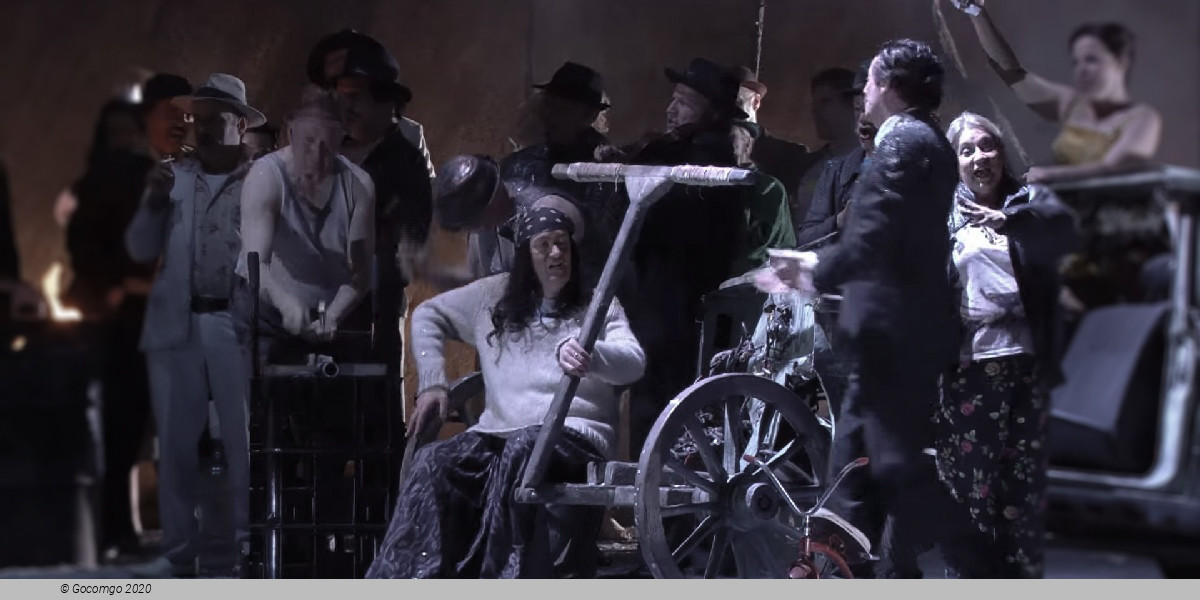
The gypsies sing the Anvil Chorus: Vedi le fosche notturne / "See! The endless sky casts off her sombre nightly garb...". Azucena, the daughter of the Gypsy burnt by the count, is still haunted by her duty to avenge her mother (Canzone: Stride la vampa / "The flames are roaring!"). The Gypsies break camp while Azucena confesses to Manrico that after stealing the di Luna baby she had intended to burn the count's little son along with her mother, but overwhelmed by the screams and the gruesome scene of her mother's execution, she became confused and threw her own child into the flames instead (Racconto: Condotta ell'era in ceppi / "They dragged her in bonds").

Manrico realises that he is not the son of Azucena, but loves her as if she were indeed his mother, as she has always been faithful and loving to him - and, indeed, saved his life only recently, discovering him left for dead on a battlefield after being caught in ambush. Manrico tells Azucena that he defeated di Luna in their earlier duel, but was held back from killing him by a mysterious power (Duet: Mal reggendo / "He was helpless under my savage attack"): and Azucena reproaches him for having stayed his hand then, especially since it was the Count's forces that defeated him in the subsequent battle of Pelilla. A messenger arrives and reports that Manrico's allies have taken Castle Castellor, which Manrico is ordered to hold in the name of his prince: and also that Leonora, who believes Manrico dead, is about to enter a convent and take the veil that night. Although Azucena tries to prevent him from leaving in his weak state (Ferma! Son io che parlo a te! / "I must talk to you"), Manrico rushes away to prevent her from carrying out this intent.

Scene 2: In front of the convent

Di Luna and his attendants intend to abduct Leonora and the Count sings of his love for her (Aria: Il balen del suo sorriso / "The light of her smile" ... Per me ora fatale / "Fatal hour of my life"). Leonora and the nuns appear in procession, but Manrico prevents di Luna from carrying out his plans and takes Leonora away with him, although once again leaving the Count behind unharmed, as the soldiers on both sides back down from bloodshed, the Count being held back by his own men.

Act 3: The Son of the Gypsy Woman

Scene 1: Di Luna's camp

Di Luna and his army are attacking the fortress Castellor where Manrico has taken refuge with Leonora (Chorus: Or co' dadi ma fra poco / "Now we play at dice"). Ferrando drags in Azucena, who has been captured wandering near the camp. When she hears di Luna’s name, Azucena’s reactions arouse suspicion and Ferrando recognizes her as the supposed murderer of the count’s brother. Azucena cries out to her son Manrico to rescue her and the count realizes that he has the means to flush his enemy out of the fortress. He orders his men to build a pyre and burn Azucena before the walls.

Scene 2: A chamber in the castle

Inside the castle, Manrico and Leonora are preparing to be married. She is frightened; the battle with di Luna is imminent and Manrico’s forces are outnumbered. He assures her of his love (Aria: Ah sì, ben mio, coll'essere / "Ah, yes, my love, in being yours"), even in the face of death. When news of Azucena’s capture reaches him, he summons his men and desperately prepares to attack (Cabaletta: Di quella pira l'orrendo foco / "The horrid flames of that pyre"). Leonora faints.

Act 4: The Punishment
Scene 1: Before the dungeon keep

Manrico has failed to free Azucena and has been imprisoned himself. Leonora attempts to free him (Aria: D'amor sull'ali rosee / "On the rosy wings of love"; Chorus & Duet: Miserere / "Lord, thy mercy on this soul") by begging di Luna for mercy and offers herself in place of her lover. She promises to give herself to the count, but secretly swallows poison from her ring in order to die before di Luna can possess her (Duet: Mira, d'acerbe lagrime / "See the bitter tears I shed").

Scene 2: In the dungeon

Manrico and Azucena are awaiting their execution. Manrico attempts to soothe Azucena, whose mind wanders to happier days in the mountains (Duet: Ai nostri monti ritorneremo / "Again to our mountains we shall return"). At last the gypsy slumbers. Leonora comes to Manrico and tells him that he is saved, begging him to escape. When he discovers she cannot accompany him, he refuses to leave his prison. He believes Leonora has betrayed him until he realizes that she has taken poison to remain true to him. As she dies in agony in Manrico's arms she confesses that she prefers to die with him than to marry another (Trio: Prima che d'altri vivere / "Rather than live as another's"). The count has heard Leonora's last words and orders Manrico's execution. Azucena awakes and tries to stop di Luna. Once Manrico is dead, she cries: Egli era tuo fratello! Sei vendicata, o madre. / "He was your brother ... You are avenged, oh mother!"

Venue Info

Teatro Dell'Opera Di Roma - Rome
Location   Piazza Beniamino Gigli

The Teatro dell'Opera di Roma is a major opera house in Rome. Originally opened in November 1880 as the 2,212-seat Costanzi Theatre, it has undergone several changes of name as well modifications and improvements. The present house seats 1,600.  Over one hundred years of success have brought the most acclaimed voices, the most prestigious sticks, and the notes of musicians who have marked its destiny to the Teatro dell'Opera di Roma: Pietro Mascagni, Giacomo Puccini, Ottorino Respighi, have delivered it to the honors of history of Italian melodrama as the cradle of 20th-century opera and musical theater.

Original Teatro Costanzi: 1880 to 1926
The Teatro dell'Opera was originally known as the Teatro Costanzi after the contractor who built it, Domenico Costanzi (1819–1898). It was financed by Costanzi, who commissioned the Milanese architect Achille Sfondrini (1836–1900), a specialist in the building and renovation of theatres. The opera house was built in eighteen months, on the site where the house of Heliogabalus stood in ancient times, and was inaugurated on 27 November 1880 with a performance of Semiramide by Gioachino Rossini.

Designing the theatre, Sfondrini paid particular attention to the acoustics, conceiving the interior structure as a "resonance chamber", as is evident from the horseshoe shape in particular. With a seating capacity of 2,212, the house had three tiers of boxes, an amphitheater, and two separate galleries, surmounted by a dome adorned with splendid frescoes by Annibale Brugnoli.

Costanzi was obliged to manage the theater himself. Under his direction, and despite financial problems, the opera house held many world premieres of operas, including Cavalleria Rusticana by Pietro Mascagni on 17 May 1890. For a brief period, the theatre was managed by Costanzi's son, Enrico, who gained renown by organizing another great premiere, that of Tosca by Giacomo Puccini on 14 January 1900.

In 1907, the Teatro Costanzi was purchased by the impresario Walter Mocchi (1871–1955) on behalf of the Società Teatrale Internazionale e Nazionale (STIN). In 1912 Mocchi's wife, Emma Carelli, became the managing director of the new Impresa Costanzi, as the theatre was later known, following various changes in the company structure. During the fourteen years of her tenure, major works which had not been performed before in Rome (or even in Italy) were staged. These included La fanciulla del West, Turandot and Il trittico by Giacomo Puccini; Parsifal by Richard Wagner; Francesca da Rimini (Zandonai) by Riccardo Zandonai; Boris Godunov by Modest Mussorgsky; Samson et Dalila by Camille Saint-Saëns and many others. Diaghilev's Ballets Russes also performed.

Restructured Teatro Reale dell'Opera: 1926 to 1946
In November 1926 the Costanzi was bought by the Rome City Council and its name changed to Teatro Reale dell'Opera. A partial rebuilding ensued, led by architect Marcello Piacentini and lasting fifteen months. The house re-opened on 27 February 1928 with the opera Nerone by Arrigo Boito.

Chief among several major changes was the relocated entrance, from the street formerly known as Via del Teatro (where the garden of the Hotel Quirinale is now) to the opposite side, where Piazza Beniamino Gigli exists today. In addition, the amphitheater inside the theatre was replaced by the fourth tier of boxes (now the third tier) and a balcony. The interior was embellished by new stuccowork, decorations, and furnishings, including a magnificent chandelier measuring six meters in diameter and composed of 27,000 crystal drops.

Above the proscenium arch is a plaque commemorating the rebuilding: "Vittorio Emanuele III Rege, Benito Mussolini Duce, Lodovicus Spada Potenziani, Romae Gubernator Restituit MCMXXVIII—VI”". Confusingly the dates appear to be back to front. (The VI refers to the sixth year after the Fascist's March on Rome of 1922.)

Present Teatro dell'Opera di Roma: from 1946
Following the end of the monarchy, the name was simplified to Teatro dell'Opera and, in 1958, the building was again remodeled and modernized. Rome City Council again commissioned architect Marcello Piacentini, who radically altered the building's style, notably with regard to the facade, entrance, and foyer, each of these taking the form we know today.

The theater's legendary acoustics still bear comparison with any other auditorium in the world. The seating capacity is about 1,600. The house was retrofitted with air-conditioning subsequent to a restoration, which provided improvements to the interior. The stucco work was completely restored, the great proscenium arch strengthened, and a parquet floor of solid oak blocks laid to replace the previous one.

On 2 January 1958, the theater was the venue for a controversial performance of Norma starring Maria Callas in the presence of the President of Italy: for health reasons, Callas abandoned the performance after the first act (the opera company had not engaged an understudy).

The post-war period saw celebrated productions, including Mozart's Le nozze di Figaro in 1964 and Verdi's Don Carlo in 1965, both conducted by Carlo Maria Giulini and directed by Luchino Visconti.

In the 1950s and 1960s, the Director was Riccardo Vitale (father of actress Milly Vitale).

In 1992, Gian Carlo Menotti was appointed Artistic Director of the Teatro dell'Opera di Roma, a post he maintained for two years before being asked to resign over conflicts with the theatre's managers involving Menotti's insistence on staging Wagner's Lohengrin.

From 2001 to 2010, the music director and chief conductor of the company were Gianluigi Gelmetti. He was due to be succeeded in these posts by Riccardo Muti, as announced in August 2009, but Muti demurred, citing in La Repubblica in October 2010 "general difficulties that are plaguing the Italian opera houses". Later, Muti assumed a role similar to that of a music director but without a title. Notable productions under Muti have included Gluck's Iphigénie en Aulide (2009), Verdi's Nabucco (2011), Simon Boccanegra (2012), and Ernani (2013).

Daniele Gatti was first guest-conducted with the company during the 2016–2017 season. He returned for subsequent guest engagements in each of the following two seasons. In December 2018, the company announced the appointment of Gatti as its new music director, with immediate effect. Gatti is scheduled to stand down as the company's music director on 31 December 2021. In June 2021, the company announced the appointment of Michele Mariotti as its next music director, effective 1 November 2022, with an initial contract of 4 years.

Important Info
Type: Opera
City: Rome, Italy
Starts at: 20:00
Acts: 4
Sung in: Italian
Titles in: English,Italian
Top of page